Grinding your own flour can save money, improve freshness, and give you more control over the grains used in everyday baking. For large batches, however, capacity, motor power, cooling, and durability matter more than compact countertop design.
We compared 10 grain mills for large batches, from high-speed electric pulverizers to dependable manual mills and stand-mixer attachments, to help you choose the right balance of output, convenience, and control.
Best 10 Grain Mills for Large Batches Picks for 2026
Best Stone Mill
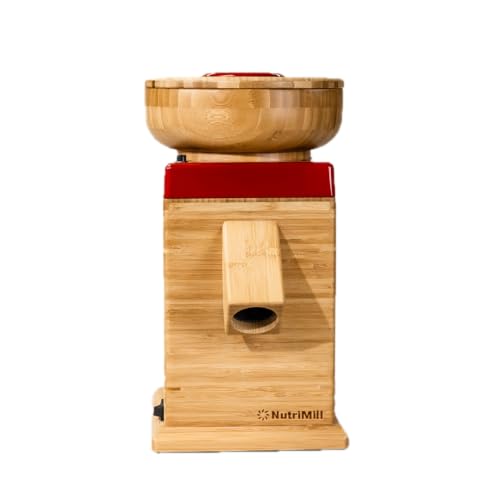
- 450-watt heavy-duty motor
- Corundum stone milling
- Adjustable texture control
Best For: Home bakers seeking adjustable stone-ground flour
Best High-Capacity Electric

- 3,000-gram batch capacity
- 3,600-watt, 36,000 RPM motor
- 30-300 mesh output range
Best For: Small businesses and high-volume dry milling
Best Manual Workhorse
Country Living Hand Grain Mill

- Two-pound capacity
- Cracked grain to cake flour adjustment
- Lifetime warranty
Best For: Off-grid and preparedness-focused home milling
Best Compact High-Speed Grinder
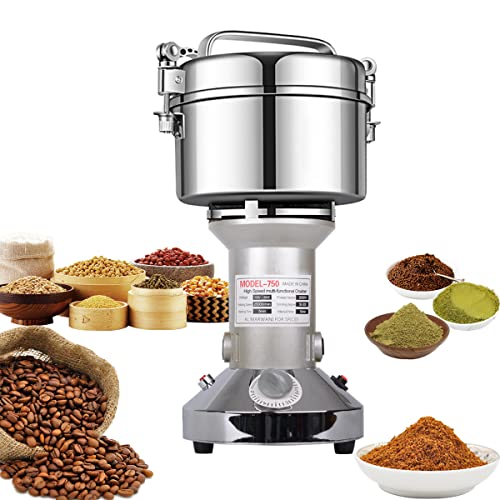
- 750-gram capacity
- 2,000-watt, 25,000 RPM motor
- 50-300 mesh fineness
Best For: Fast repeated batches of dry grains and spices
Flexible Mixer Milling
KitchenAid-Compatible Grain Mill Attachment
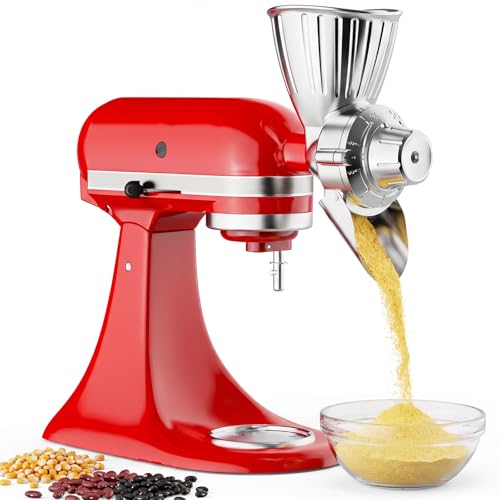
- Larger hopper for more dry grain at once
- Nine coarse-to-fine grind settings
- All-metal, removable design with brush
Best For: KitchenAid owners milling dry grains, spices, or coffee
High-Speed Bulk Grinding
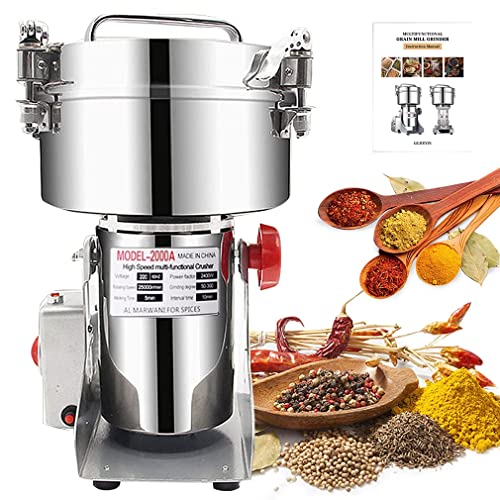
- 2000g capacity with 28000 RPM speed
- Produces superfine 50–300 mesh powder
- Timer and overload protection included
Best For: Fast, staged batches of dry grains, spices, and herbs
Established Mixer Attachment
KitchenAid KGM All-Metal Grain Mill

- 10-cup capacity for larger home batches
- 12 grind levels from coarse to fine
- Fits household KitchenAid stand mixers
Best For: KitchenAid owners milling low-moisture grains
Best with Extra Features

- 2500g maximum capacity for larger batches
- 3400W motor with 32000 RPM operation
- Adjustable 30–300 mesh fineness
Best For: Fast grinding of large quantities of dry grains and spices
Self-Sufficient Manual Choice
Lehman's 6-Cup Power Grain Mill

- Large 6-cup hopper
- 12-inch flywheel eases hand grinding
- Can be motorized or bolted to a base
Best For: Manual dry-grain milling without relying on electricity
Versatile Hand-Mill Pick
Wonder Junior Deluxe Grain Mill

- Grinds up to 1.25 cups of flour per minute
- Stone and stainless-steel burr sets included
- Handles nuts, seeds, oily, and wet foods
Best For: Versatile manual milling beyond standard dry grains
Best Stone Mill – NutriMill Harvest
The NutriMill Harvest is a practical option among grain mills for large batches when you want a dedicated home flour mill with stone grinding. Its 450-watt motor, corundum milling stones, and texture control knob support adjustable grinding for regular baking.
Best For: Home bakers who want adjustable stone-ground flour and a compact, USA-assembled electric mill.
Pros:
- 450-watt heavy-duty motor for household grinding
- Near-diamond-hard corundum Grainmaster milling stones
- Texture control knob adjusts the grind
- Thermal protection includes automatic shutoff
Cons:
- No batch capacity is specified in the supplied details
- At 20.4 pounds, it is not especially lightweight
The Harvest stands out for controlled stone milling rather than maximum throughput. Its thermal protection and adjustable texture make it a sensible choice for repeated home use, provided you do not need a stated high-capacity hopper.
Best High-Capacity Electric – 3000G Grain Mill
For shoppers specifically comparing grain mills for large batches, this 3000G model offers the largest stated capacity in the lineup. Its 3,600-watt motor and 3,000-gram chamber are designed to process a substantial dry batch, though the short duty cycle requires planned breaks.
Best For: Small businesses, delis, and high-volume home users processing dry grains, spices, or coffee in batches up to 3,000 grams.
Pros:
- 3,000-gram capacity for larger batches
- 3,600-watt copper motor with 36,000 RPM rotation
- 30-300 mesh fineness range
- Overload protection and a 270-degree swing design
Cons:
- Limited to dry, moisture-free ingredients
- Requires a 5-10 minute cooldown after each three-minute grinding cycle
- Chamber should be filled no more than two-thirds full
This is the strongest capacity-focused pick here, but it is not a continuous-duty machine. The required cooldowns and dry-only operation matter if you are planning sustained production rather than successive controlled batches.
Best Manual Workhorse – Country Living Hand Grain Mill
The Country Living Hand Grain Mill is a durable manual alternative for grain mills for large batches when electricity is unavailable or you prefer hands-on control. Its two-pound capacity and adjustable settings cover everything from cracked grain to cake flour.
Best For: Off-grid households, preparedness-minded users, and bakers who value a repairable-feeling manual design over electric speed.
Pros:
- Two-pound stated capacity
- Adjustable from cracked grain to cake flour
- Industrial-grade double-sealed ball bearings
- Solid cast aircraft aluminum construction with a lifetime warranty
Cons:
- Manual operation is slower and more labor-intensive than electric milling
- Its two-pound capacity may require multiple loads for very large batches
- No motor-assisted output is provided
This mill trades speed for independence and durability. It makes sense when batch size can be handled through repeated loads and you want adjustable results without relying on an electrical outlet.
Best Compact High-Speed Grinder – 750g Electric Grain Mill
This 750g electric grinder suits shoppers who want grain mills for large batches but need a smaller, high-speed machine for repeated loads. Its 2,000-watt motor, 25,000 RPM speed, and three-blade design can produce a 50-300 mesh powder in under a minute, with cooldown time required between cycles.
Best For: Kitchens, restaurants, and small processing tasks involving dry grains, spices, herbs, coffee, and similar ingredients.
Pros:
- 750-gram capacity for manageable batch processing
- 2,000-watt motor and 25,000 RPM speed
- 50-300 mesh fineness range
- Automatic overload shutoff with reset button
Cons:
- Dry ingredients only; wet, oily, or moist materials are unsuitable
- Recommended operation is limited to three minutes followed by a 5-10 minute rest
- Should be filled no more than two-thirds of the jar
The 750g capacity is more suited to repeated medium-size batches than one large run. Its fast grinding and broad ingredient range are useful, but the duty cycle should be part of your workflow planning.
Flexible Mixer Milling – KitchenAid-Compatible Grain Mill Attachment
If you already own a KitchenAid stand mixer, this attachment is a practical way to handle grain mills for large batches without adding a separate countertop motor. Its larger hopper, nine grind settings, and all-metal construction suit fresh flour and dry-grain milling, though cooling breaks are important during extended use.
Best For: KitchenAid owners who want adjustable, small-to-moderate batch milling for dry grains, spices, or coffee beans.
Pros:
- Works with KitchenAid stand mixers and has a larger hopper for processing more grain at once.
- Nine adjustable settings provide coarse-to-fine control.
- Die-cast aluminum alloy construction is durable and food-safe.
- Removable design and included brush simplify dry cleaning.
Cons:
- Not intended for oily foods.
- Requires starting coarse and gradually moving finer to help prevent clogging.
- Extended batches require 30–45 minute mixer cooling breaks.
This is a convenient choice for mixer owners who value versatility and control. For truly continuous large-batch work, the required cooling intervals may make a dedicated mill more practical.
High-Speed Bulk Grinding – 2000g Electric Grain Grinder
For shoppers comparing grain mills for large batches, this high-speed electric grinder offers a large 2000g capacity and very fine results for dry ingredients. Its 3000W motor, timer, and overload protection are useful for fast processing, but the short operating cycles mean it is not designed for uninterrupted production.
Best For: Home kitchens, food stores, and small processing tasks that need fast, superfine grinding of dry grains and other ingredients.
Pros:
- Large 2000g grinding capacity with 28000 RPM operation.
- Adjustable timer from 0 to 5 minutes and automatic shutoff.
- 304 stainless steel three-layer blades and food-grade stainless steel body.
- Handles dry grains, rice, coffee, spices, herbs, and nuts.
Cons:
- Recommended operation is no more than three minutes, followed by a five-to-ten-minute rest.
- Materials should stay below two-thirds of the grinding bin.
- Grinding chamber should not be rinsed directly with water.
This model emphasizes speed and capacity rather than continuous milling. It can be efficient for staged batches, provided you follow the rest periods and use only sufficiently dry ingredients.
Established Mixer Attachment – KitchenAid KGM All-Metal Grain Mill
The KitchenAid KGM is a straightforward option for grain mills for large batches when you want to use an existing household stand mixer. Its 10-cup capacity, 12 grind levels, and metal construction support flexible milling of low-moisture, low-oil grains such as wheat, corn, and rice.
Best For: KitchenAid stand-mixer owners who want a higher-capacity attachment for adjustable, low-moisture grain milling.
Pros:
- Fits all household KitchenAid stand mixers.
- Offers 12 grind levels from coarse to fine.
- 10-cup capacity is useful for larger home batches.
- Includes a cleaning brush and a one-year hassle-free warranty.
Cons:
- Limited to low-moisture and low-oil grains.
- Requires a compatible KitchenAid stand mixer to operate.
- Uses the mixer’s motor rather than a dedicated milling motor.
With its larger stated capacity and broad grind adjustment, the KGM is a solid fit for regular home milling. It is less suitable if you need to process oily ingredients or operate independently of a stand mixer.
Best with Extra Features – 2500g Dry Grain Pulverizer
For shoppers comparing grain mills for large batches, this VEVOR model emphasizes speed and capacity. Its 3400W motor, 2500g maximum capacity, and 32000 RPM operation are designed to turn dry grains, coffee beans, and spices into fine powder quickly.
Best For: Large batches of dry grains, spices, coffee beans, and other non-oily ingredients.
Pros:
- Large 2500g capacity suits batch-oriented grinding.
- High-speed motor can process dry ingredients in as little as 30 seconds.
- Offers adjustable 30–300 mesh fineness and 5-, 15-, or 30-second timer settings.
- Stainless-steel body and 270° swing design support easier pouring and cleanup.
Cons:
- Not suitable for wet, fresh, oily, or sticky materials.
- Requires rest periods after continuous operation.
- The body, cup, and blades should be cleaned with a damp cloth rather than rinsed directly.
This is the most capacity-focused option in the group, especially for users who prioritize fast processing of dry ingredients. Its limitations around moisture and oil make it less versatile than a hand mill designed for those foods.
Self-Sufficient Manual Choice – Lehman's 6-Cup Power Grain Mill
Among grain mills for large batches, Lehman’s manual mill stands out for its oversized hopper and momentum-assisted hand grinding. It handles free-flowing dry grains such as wheat, corn, rye, rice, quinoa, and small beans, producing pastry flour without requiring electricity.
Best For: Off-grid or self-sufficient users milling larger amounts of dry grain by hand.
Pros:
- Extra-large hopper holds 6 cups.
- Large 12-inch iron flywheel provides momentum for easier hand grinding.
- Stainless-steel burrs are electrolytic polished for a smooth grinding surface.
- Can be motorized and has pre-drilled base holes for bolting down.
Cons:
- Limited to free-flowing, dry grains and small beans.
- At 26 pounds and 14 inches high, it requires substantial setup space.
- Manual operation may be slower and more labor-intensive than an electric mill.
Its six-cup hopper and substantial flywheel make this a practical manual option when electricity independence matters. Choose it for dry-grain processing and a sturdy setup rather than maximum speed or broad ingredient versatility.
Versatile Hand-Mill Pick – Wonder Junior Deluxe Grain Mill
For grain mills for large batches that also need to handle varied ingredients, the Wonder Junior Deluxe offers a flexible hand-crank design. It can produce up to 1.25 cups of flour per minute and includes stone and stainless-steel burrs for grains, nuts, seeds, spices, and oily foods.
Best For: Users who want a durable manual mill for flour, cracked grains, nut butter, spices, and higher-oil ingredients.
Pros:
- Produces up to 1.25 cups of flour per minute.
- Includes stone and stainless-steel burr sets for different ingredients.
- Handles dry and wet grains, nuts, seeds, oily foods, cocoa, coffee, and spices.
- Double-clamp mount attaches securely to a table or counter without drilling.
Cons:
- Its 1.25-cup capacity is smaller than the large hopper capacities of the other listed mills.
- Hand-crank operation requires ongoing physical effort for large batches.
- At 18 inches long, it needs enough counter or storage space.
This model is the broadest ingredient specialist of the three, particularly if your batches include oily, moist, or sticky foods. It is less suited to maximum-volume production, but its burr options and secure clamp make it a capable all-purpose manual mill.
How We Picked the Best Grain Mills for Large Batches
We focused on the features that matter when processing substantial amounts of dry grain: grinding power, stated capacity, construction, operating speed, ease of use, and suitability for different ingredients. The selection includes electric mills for speed, manual models for reliability and off-grid use, and KitchenAid attachments for shoppers who already own a compatible stand mixer.
Because product specifications and real-world performance can vary, treat advertised wattage, capacity, and speed as comparison points rather than guarantees. Always follow the manufacturer’s instructions for batch size, rest periods, and acceptable ingredients.
Quick Comparison
| Type | Best For | Main Advantage | Potential Trade-Off |
|---|---|---|---|
| High-power electric mill | Frequent, large-volume grinding | Fast output with minimal effort | Noise, heat, and higher power use |
| Stone electric mill | Fresh flour and adjustable texture | Versatile home milling | Usually slower than pulverizers |
| Manual mill | Preparedness and long-term durability | No electricity required | More physical effort |
| Stand-mixer attachment | Occasional milling in a compact kitchen | Uses equipment you already own | Lower throughput than dedicated mills |
Key Buying Factors for Grain Mills for Large Batches
Capacity and Batch Workflow
A large hopper or grinding chamber can reduce refilling, but chamber capacity is not the same as finished output. Check whether the mill is designed for continuous operation or requires cooling breaks. A timer, overload protection, or clearly stated duty cycle can be useful when processing several pounds at once.
Motor Power and Grinding Speed
Higher wattage and RPM may shorten grinding time, especially for hard grains, but they can also create more heat and noise. Stone mills are often chosen for flour texture and adjustability, while high-speed stainless-steel grinders may suit shoppers prioritizing rapid pulverizing. Match the mill to the grains you use most rather than choosing based on wattage alone.
Materials, Cleanup, and Adjustability
Metal housings and burrs or stones built for repeated use generally offer better longevity than lightweight plastic components. Look for removable parts, accessible grinding chambers, and settings that let you move from coarse meal to finer flour. Confirm whether the parts are hand-wash only and whether replacement stones, burrs, or screens are available.
Ingredient Compatibility
Not every grain mill handles oily foods, nuts, seeds, herbs, or spices. If you plan to grind beyond wheat, corn, or rice, verify the approved ingredient list. Using unsuitable ingredients can clog the mechanism or damage the motor.
Who Should Buy Which Grain Mills for Large Batches?
Choose a dedicated electric mill if you bake often or need to process large quantities with minimal manual effort. A stone electric model is a strong fit for home bakers who value flour texture and adjustable results. A high-speed stainless-steel grinder may be better for shoppers who prioritize rapid, fine pulverizing across dry grains and spices.
Choose a manual mill if reliability, emergency preparedness, or electricity-free operation is most important. It is also a sensible option for users who prefer simple mechanical equipment and do not mind slower, more physical grinding. A KitchenAid attachment makes the most sense when storage space is limited and you already own a compatible mixer, but check expected volume before relying on it for frequent large batches.