Making fresh juice, cider, or infused extracts at home does not require a large processing setup. The best fruit presses for small kitchens provide useful pressure and manageable capacity without taking over your workspace.
This roundup compares compact manual presses across materials, basket sizes, handle designs, and intended uses, helping you choose a model that fits both your recipes and available storage.
Best 10 Fruit Presses for Small Kitchens Picks for 2026
Compact Soft-Fruit Press
2L Stainless Steel Manual Juicer
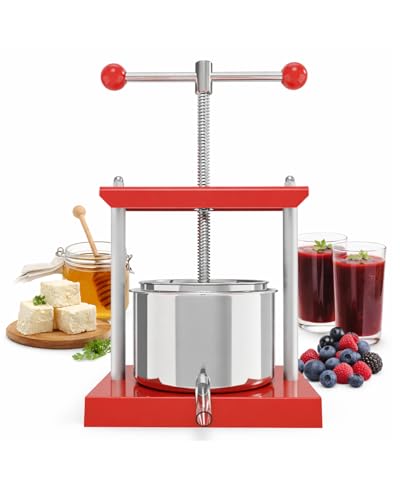
- 2L compact stainless steel design
- Includes reusable mesh filter bag
- For crushed soft fruit and infusions
Best For: Small-batch berries, grapes, herbs, honey, and cheese
Lever Citrus Press

- Gravity-assisted lever reduces effort
- Stable weighted base with rubber pad
- Detachable stainless bowl and strainer
Best For: Frequent citrus, pomegranate, cocktail, and juice pressing
Small-Batch Wine Press
3L Stainless Steel Fruit Press

- 3L stainless steel pressing basket
- Includes a filter bag for cleaner output
- Quiet manual operation for juice and brewing
Best For: Small-batch juice, cider, wine, and home brewing
Best Wooden Basket Press
Compact 1.6-Gallon Fruit and Wine Press

- Quiet manual operation with no motor
- Beechwood basket with built-in pour spout
- Optional foot mounting for added stability
Best For: Small-batch apple, grape, and berry juice or wine
Best for Everyday Use

- Lever-assisted pressing reduces effort
- Includes a stainless steel collection cup
- Suction cups help secure it on the counter
Best For: Fresh orange, lemon, and pomegranate juice
Best Stainless Steel Press
0.88-Gallon Fruit and Wine Maker

- T-handle design for manual pressing
- Stainless steel components and two filter screens
- Suitable for juice, wine, puree, cheese, and herbs
Best For: Versatile countertop pressing with prepared fruits and vegetables
Best Multi-Use Press
Stainless Steel Home Fruit & Wine Press

- 0.53-gallon capacity for small batches
- T-handle provides pressing leverage
- Handles juice, wine, oil, cheese, herbs, and honey
Best For: Home users wanting one press for varied small-batch kitchen tasks
Best Easy-Clean Option
VEVOR 0.44-Gallon Fruit Wine Press

- 1.65-liter capacity for family-size batches
- Thickened stainless steel pressing plate
- Disassembles for cleaning and includes two filter bags
Best For: Small kitchens seeking manageable juice and cider pressing
Best Quiet Manual Press
SQUEEZE master 2-Liter Fruit Press

- Power-ball handle boosts leverage and stability
- 2-liter capacity for fruits and vegetables
- Electricity-free operation is described as quiet
Best For: Users wanting quiet manual juice and multi-purpose pressing
Compact Soft-Fruit Press – 2L Stainless Steel Manual Juicer
For small kitchens, this compact fruit press is a practical choice for soft fruit, herbs, honey, cheese, and tofu. Its 2L stainless steel capacity suits small batches, while the included mesh filter bag helps separate seeds, pulp, and residue. Keep in mind that fruit should be chopped or crushed before pressing.
Best For: Soft fruits, berries, grapes, herbal infusions, honey, and small-batch cheese or tofu pressing.
Pros:
- Compact 0.53-gallon capacity for small-batch work and easier storage.
- Stainless steel buckets are durable, acid-resistant, and easy to rinse.
- Included reusable mesh filter bag improves filtration.
- Manual T-handle provides controlled pressure without a motor.
Cons:
- Requires ingredients to be finely chopped or crushed first.
- Not designed for whole hard fruits such as apples or pears.
- Hand-wash care is specified.
This is a focused option among fruit presses for small kitchens when compact storage and clean filtration matter more than high-volume processing. It is best suited to soft produce and prepared ingredients rather than hard whole fruit.
Lever Citrus Press – Cast Iron Manual Juicer
This heavy-duty lever press is a strong fit for small kitchens that regularly prepare citrus juice, cocktails, or pomegranate juice. Its gravity-assisted handle and weighted base are designed to make pressing quick and stable without electricity, though the cast iron construction may be more substantial than compact handheld models.
Best For: Lemons, oranges, grapefruits, pomegranates, home juice, cocktails, and frequent countertop use.
Pros:
- Lever design applies steady pressure with minimal hand effort.
- Weighted base and rubber pad help reduce sliding and wobbling.
- Detachable stainless steel bowl and cone strainer are dishwasher-safe.
- Designed for fast manual pressing without cords or motor noise.
Cons:
- Primarily intended for citrus and pomegranates rather than soft berries or broad fruit-pressing tasks.
- At 15 inches tall, it may require dedicated counter or cabinet space.
- The juicer body requires hand washing.
Among fruit presses for small kitchens, this model favors leverage and stability over minimal size. Choose it if repeated citrus pressing is your priority and you have room for a sturdy countertop appliance.
Small-Batch Wine Press – 3L Stainless Steel Fruit Press
This 3L manual fruit press gives small kitchens extra capacity for juice, cider, wine making, and home brewing without adding motor noise. Its food-grade stainless steel basket and included filter bag support cleaner separation of juice and pulp, while the hand-operated design avoids electricity and reduces oxidation compared with powered juicing.
Best For: Small-batch juice, cider, wine making, home brewing, and pressed fruit or vegetable preparations.
Pros:
- 3L capacity handles more ingredients per batch than a 2L press.
- Food-grade stainless steel offers rust resistance and sturdiness.
- Perforated basket and included filter bag support filtration.
- Quiet, motor-free operation suits shared homes and nighttime use.
Cons:
- At 11.09 pounds, it is less convenient to move than lighter presses.
- The larger 14.38-inch-tall design may need careful storage planning.
- Manual pressing requires physical effort for each batch.
This is a capable middle ground for fruit presses for small kitchens: more productive than a very small press while remaining quiet and manual. It makes the most sense for users who need 3L batches and want one press for juice, cider, and brewing projects.
Handheld Citrus Squeezer – 20-Ounce Long-Handle Press
This handheld press is the most space-conscious option here for small kitchens, with a 20-ounce bowl and a compact 9.3-inch length. Long handles provide leverage for lemons, limes, oranges, and small pieces of pomegranate, making it useful for drinks and cooking without the footprint of a countertop press.
Best For: Lemonade, margaritas, citrus juice, cocktails, and occasional pomegranate pressing.
Pros:
- Handheld format stores easily in a drawer or small cabinet.
- Long handles provide controlled leverage while pressing.
- Deep 20-ounce bowl includes a pour spout.
- Suitable for citrus and small pieces of pomegranate.
Cons:
- Requires loading one fruit half at a time and avoiding overfilling.
- Hand-wash and towel-dry care is needed to prevent the aluminum from darkening.
- Smaller bowl is less suited to large batches.
For shoppers comparing fruit presses for small kitchens, this is the simplest space-saving choice. It works best when convenience, drawer storage, and single-serving citrus preparation matter more than pressing capacity or versatility.
Best Wooden Basket Press – Compact 1.6-Gallon Fruit and Wine Press
For shoppers comparing fruit presses for small kitchens, this manual model offers a compact 1.6-gallon capacity in a 7.48-inch-by-7.48-inch footprint. Its beechwood basket and hand-operated design suit seasonal batches of apples, grapes, or berries without requiring electricity.
Best For: Home users making fresh juice or small batches of homemade wine from crushed fruit.
Pros:
- Manual operation is quiet and requires no motor.
- Solid red beech basket is designed to resist moisture and wear.
- Built-in pour spout and optional foot mounting help with juice collection and stability.
- Breakaway basket design makes pulp removal more convenient.
Cons:
- Hand wash only, so cleanup requires more hands-on care.
- Fruit must be crushed before loading.
- The 1.6-gallon capacity is better suited to smaller batches than large-scale pressing.
This is a practical choice when a traditional wooden basket, quiet use, and a relatively small capacity matter more than fast, high-volume processing.
Best for Everyday Use – Heavy-Duty Cast Iron Juicer
Among fruit presses for small kitchens, this countertop citrus press stands out for its lever-assisted operation and compact 15-ounce collection cup. The cast-iron frame is built for repeated use, while the removable fruit-contact parts simplify cleanup.
Best For: Quickly pressing oranges, lemons, pomegranates, and similar halved fruits directly on the countertop.
Pros:
- Lever design helps produce juice with less effort.
- Heavy-duty cast-iron construction is intended for continuous juicing.
- Stainless steel cup collects juice without requiring a separate measuring container.
- Removable fruit-contact parts are dishwasher safe, and suction cups help hold the press in place.
Cons:
- Its 15-ounce capacity is intended for individual servings rather than large batches.
- The 7.23-kilogram weight makes it less convenient to move frequently.
- It is primarily designed for halved citrus and pomegranates, not crushed apples or general fruit pulp.
Choose this model if countertop stability, fast lever action, and easy citrus juicing are priorities. Its heavy construction is less ideal if you need a lightweight or highly portable press.
Best Stainless Steel Press – 0.88-Gallon Fruit and Wine Maker
For fruit presses for small kitchens that need more versatility, this stainless steel model provides a 0.88-gallon inner capacity and a manual T-handle. It can press prepared fruit and vegetables as well as support projects involving cider, wine, puree, cheese, olive oil, or herbs.
Best For: Countertop users who want a multipurpose press for small-to-medium batches and varied kitchen or home-winemaking projects.
Pros:
- Stainless steel press plate, barrels, and food-contact components resist corrosion and wear.
- T-handle operation is straightforward once fruit is prepared.
- Disassemblable barrels support easier cleaning, and the stainless parts are dishwasher compatible according to the supplied notes.
- Includes two food-grade filter screens and a stable metal base and bracket.
Cons:
- Hard fruits such as apples and carrots must be mashed before pressing.
- Grapes and oranges need to be peeled and cut into small pieces.
- At 17.9 inches tall and 5.8 kilograms, it may take more storage space and handling effort than a small citrus press.
This press offers a useful balance of capacity and versatility, especially for households that make more than one type of pressed food. Preparation and cleanup still require some hands-on work.
Best Multi-Use Press – Stainless Steel Home Fruit & Wine Press
For shoppers comparing fruit presses for small kitchens, this manual stainless steel model offers a compact 0.53-gallon capacity and several extraction uses. Its T-handle is designed to provide leverage for small-batch juice, wine, oil, cheese, herb, or honey processing.
Best For: Home users who want one manual press for fruit juice and other small-batch kitchen projects.
Pros:
- Stainless steel construction resists rust and corrosion.
- Ergonomic T-handle helps reduce hand fatigue during pressing.
- Supports juice, wine, oil, cheese, herb, and honey processing.
- Removable parts and an included filter bag simplify setup and cleaning.
Cons:
- At 28 pounds, it is relatively heavy for a small-kitchen appliance.
- Hand washing is recommended.
- The 0.53-gallon capacity is intended for small batches rather than high-volume pressing.
This is a versatile choice when durability and multiple extraction functions matter more than portability. Its heavier build may require dedicated storage, but the manual design suits occasional home pressing without electricity.
Best Easy-Clean Option – VEVOR 0.44-Gallon Fruit Wine Press
Among fruit presses for small kitchens, the VEVOR 0.44-gallon model stands out for its countertop-friendly capacity and stainless steel construction. The manual T-handle, thickened pressing plate, and included filter bags are suited to fresh juice, cider, and other modest batches.
Best For: Families and small kitchens that prioritize straightforward operation and easier cleanup.
Pros:
- Compact 1.65-liter capacity fits small-batch pressing needs.
- Thickened stainless steel pressing plate is designed for thorough extraction.
- Disassembles for cleaning, with dishwasher cleaning noted in the product description.
- Includes two food-grade filter bags and supports juice, wine, cheese, oil, herbs, and honey.
Cons:
- The 19.57-inch height may require checking available counter or storage space.
- Fruit should be pre-cut and placed in a filter bag for better results.
- The product-care details also specify hand washing.
With a 7.1-pound weight and 0.44-gallon capacity, this press is easier to move than heavier alternatives while still offering a stable metal frame. It is a practical fit for occasional family-size juice and cider batches.
Best Quiet Manual Press – SQUEEZE master 2-Liter Fruit Press
For fruit presses for small kitchens where quiet, electricity-free operation matters, the SQUEEZE master combines a 2-liter capacity with a power-ball handle. Its stainless steel and iron construction is designed for pressing fruits, vegetables, cheese, tinctures, herbs, wine, cider, and olive oil.
Best For: Users who want a quiet manual press for fresh juice and varied home extraction projects.
Pros:
- Power-ball handle is designed to increase torque and stability.
- Supports fruits, vegetables, cheese, tinctures, herbs, wine, cider, and olive oil.
- Manual operation requires no electricity and is described as quiet.
- Rust-resistant construction and dishwasher-safe care support regular use.
Cons:
- The listed 15-by-17-by-31-inch dimensions make it substantially taller than many countertop presses.
- The iron and stainless steel construction may be less convenient to move than a lighter model.
- A 2-liter capacity may be more than needed for very small batches.
This model offers useful leverage and a larger small-batch capacity, but its 31-inch height deserves careful consideration before purchase. It is most suitable where vertical storage and countertop clearance are available.
How We Picked the Best Fruit Presses for Small Kitchens
We compared these presses by capacity, construction, pressing mechanism, cleanup requirements, stability, and the types of produce they are designed to handle. Small-kitchen suitability was especially important, so we considered footprint, storage practicality, and whether a press can handle occasional batches without unnecessary bulk.
The selection includes stainless-steel food presses, cast-iron citrus squeezers, compact wine and cider presses, and multipurpose models for berries, grapes, herbs, honey, tinctures, and soft fruit. Product descriptions and listed features were weighed against the likely needs of home users rather than commercial operators.
Quick Comparison
| Best For | Recommended Capacity | Useful Features |
|---|---|---|
| Citrus and pomegranate juice | Small | Hand lever, sturdy cast iron, easy serving |
| Soft fruit and herbs | About 0.5 gallon | Filter bag, compact frame, multipurpose use |
| Home cider and wine | 0.8–1.6 gallons | Basket, T-handle or screw mechanism, stable base |
| Infusions and tinctures | About 0.5 gallon | Fine control, stainless-steel components, easy cleaning |
Key Buying Factors for Fruit Presses for Small Kitchens
Capacity and Counter Space
Choose the smallest capacity that matches your usual batch size. Presses around 0.44 to 0.53 gallons are easier to store and suit sauces, herbs, berries, and occasional juice. Models from 0.8 to 1.6 gallons are more practical for cider or wine but need more clearance and storage space.
Materials and Food Contact Surfaces
Stainless steel is a practical choice for frequent food use because it resists corrosion and is generally straightforward to sanitize. Cast iron offers strength and leverage, but it may need careful drying and maintenance. Wooden baskets can be useful for traditional cider pressing, though they require more attention after use.
Pressing Power and Stability
A long handle, screw mechanism, or geared design can reduce hand effort. Check for a broad base, secure feet, and enough room beneath the basket for your collection container. A lightweight press may be easier to store but can shift during demanding batches.
Cleaning and Storage
Look for removable baskets, filter bags, accessible pressing plates, and surfaces without difficult crevices. Measure your cabinet or pantry before buying, including the height of any upright handle.
Who Should Buy Which Fruit Presses for Small Kitchens?
Choose a compact soft-fruit or herb press if you mainly make small batches of berry juice, honey, extracts, or tinctures. A cast-iron citrus press is the better fit for lemons, limes, oranges, and pomegranates when speed and simple operation matter most.
For homemade cider, wine, or larger grape and apple batches, select a 0.8- to 1.6-gallon basket press with a stable stand. If versatility is your priority, a stainless-steel multipurpose model can cover juice, herbs, olive oil, and other small-batch applications. Before ordering, confirm the listed capacity, included filter accessories, dimensions, and cleaning instructions so the press suits your kitchen rather than merely offering the largest basket.