Finding the right dough kneading machine for small batches means balancing bowl size, kneading performance, countertop space, and cleanup. The best choice should handle your usual dough quantity without forcing you to pay for unnecessary capacity.
We compared 10 compact and mid-size options, including traditional stand mixers and dedicated dough makers with fermentation functions, to help you choose a practical match for your baking routine.
Best 10 Dough Kneading Machines for Small Batches Picks for 2026
Best Compact Pick
Kitchen in the box 3.2Qt Stand Mixer
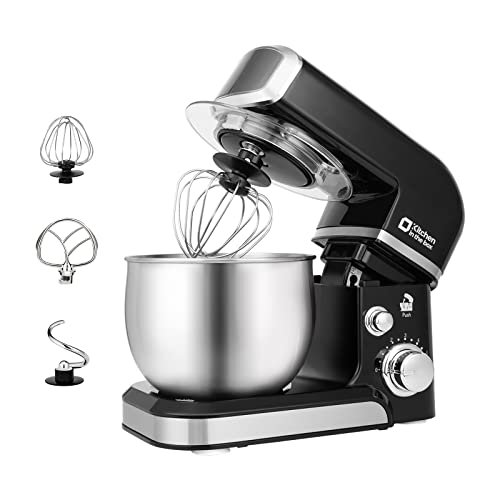
- Compact 7-pound design for limited counter space
- Six speeds with dough hook, beater, and whisk
- 3.2-quart bowl suits smaller everyday recipes
Best For: Couples, beginners, and compact kitchens
Best Automated Proofing

- Automatic kneading followed by fermentation
- Constant 100°F proofing environment
- Transparent lid and 7.4-quart stainless bowl
Best For: Hands-off bread and pizza dough preparation
Best Versatile Stand Mixer
KitchenAid Classic 4.5Qt Mixer
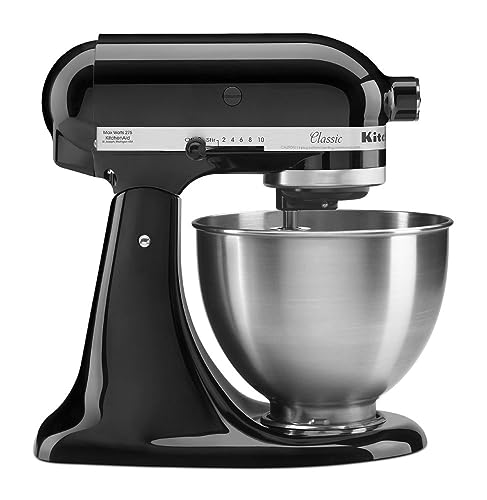
- Durable metal construction with 10 speeds
- 4.5-quart bowl and included dough hook
- Supports more than 10 optional attachments
Best For: Bakers wanting one multipurpose, sturdy mixer
High-Capacity Classic
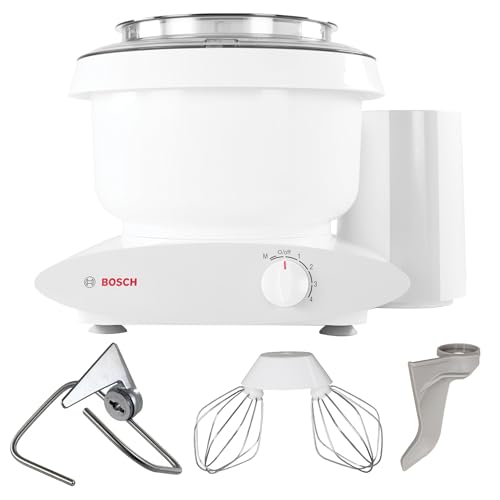
- 6.5-quart bowl handles both small and large jobs
- Kneads up to 15 pounds of whole-grain dough
- Includes dough hook, whips, and extender
Best For: Versatile baking households that may scale batches up
Feature-Rich Fermentation Choice
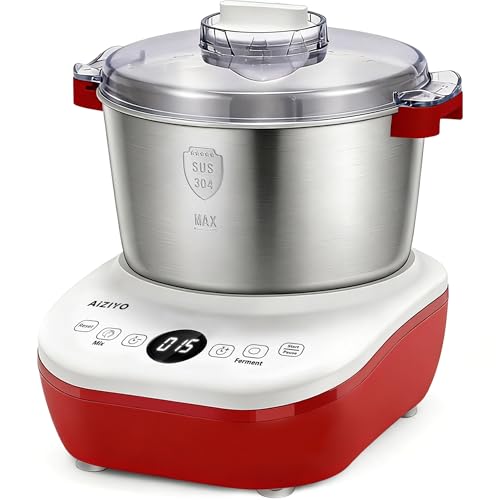
- Combines mix and proof functions
- Maintains 77–100°F for fermentation
- Wide opening supports ingredient additions
Best For: Convenience-focused bakers wanting guided kneading and proofing
Quiet Fermentation Pick
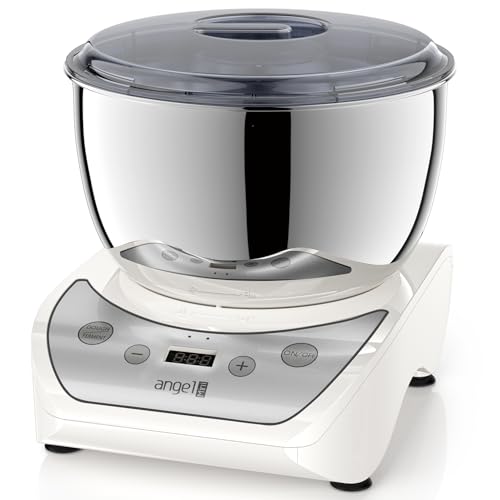
- 86–104°F constant-temperature fermentation
- Touch controls and adjustable timer
- 304 stainless steel bowl with low-noise base
Best For: Home bakers wanting simple kneading and proofing in one machine
Best Control and Coverage

- 300–1,400g stated dough range
- Mix-pause-mix kneading with S-shaped blade
- 77–95°F fermentation and knob control
Best For: Bakers wanting precise controls and versatile dough handling
Best Compact Pick – Kitchen in the box 3.2Qt Stand Mixer
For shoppers comparing dough kneading machines for small batches, this lightweight stand mixer is designed for compact kitchens, apartments, and everyday baking. Its 3.2-quart bowl, six speeds, and included dough hook suit smaller quantities of bread dough, thick batter, and other recipes.
Best For: Couples, beginners, and small kitchens that need a lightweight, versatile mixer.
Pros:
- Compact 7-pound design with a 3.2-quart stainless steel bowl.
- Six speeds support dough, batter, whipping, and gentle stirring.
- Includes a dough hook, flat beater, whisk, and splash lid.
- Four anti-slip suction cups help keep the mixer steady.
Cons:
- The smaller bowl is better suited to small batches than large family-sized recipes.
- Its 300-watt motor may be less appropriate for frequent heavy-duty dough making.
This is a practical choice when storage space matters most. The tilt-head design and dishwasher-safe accessories simplify setup and cleanup, while the included attachments make it more flexible than a dough-only machine.
Best Automated Proofing – Saker 7.4Qt Dough Maker
Among dough kneading machines for small batches, the Saker is a larger option with automation built in. It kneads dough and then moves into fermentation, making it useful for bakers who want less hands-on monitoring for bread, pizza, buns, and similar recipes.
Best For: Home bakers who want automatic kneading and consistent proofing for family recipes.
Pros:
- Automatically kneads and ferments dough in one workflow.
- Maintains a constant 100°F fermentation environment.
- Large 7.4-quart stainless steel bowl handles everyday or larger batches.
- Transparent lid, feeding window, touch controls, and removable bowl support easier use.
Cons:
- Its 7.4-quart capacity and 14-inch depth take more space than a compact small-batch mixer.
- The 250-watt motor and single dough-focused design offer less attachment versatility than a stand mixer.
The Saker is best viewed as a convenience-focused dough maker rather than a general-purpose mixer. Its timed fermentation and noise-reduction design can reduce supervision, but the larger footprint may be excessive for truly small quantities.
Best Versatile Stand Mixer – KitchenAid Classic 4.5Qt Mixer
The KitchenAid Classic is a durable stand-mixer option for shoppers seeking dough kneading machines for small batches without giving up broader kitchen versatility. Its 4.5-quart bowl, ten speeds, and included dough hook support dough work alongside mixing, whipping, and other everyday tasks.
Best For: Bakers who want a sturdy, multipurpose mixer with room for small-to-medium recipes.
Pros:
- Durable metal construction with 59 touchpoints for thorough mixing.
- Ten speeds provide control from gentle stirring to whipping.
- Includes a stainless steel bowl, flat beater, dough hook, and wire whip.
- Compatible with more than 10 optional attachments for expanded functionality.
Cons:
- At 22 pounds, it is substantially heavier than compact small-batch mixers.
- Optional attachments are sold separately.
- The 4.5-quart bowl may be larger than necessary for very small quantities.
This model makes sense when a buyer wants one durable appliance for dough and many other recipes. It is less convenient to move or store than lightweight alternatives, but its metal build, speed range, and attachment ecosystem offer long-term flexibility.
Best Timed Dough Maker – Joydeem 7.4Qt Fermenting Machine
The Joydeem combines automatic kneading, timed programs, and fermentation in a dough-focused appliance. For shoppers comparing dough kneading machines for small batches, its 6.6-quart capacity is better suited to preparing several portions of bread, pizza, buns, or dumplings at once than to very small test batches.
Best For: Families and home bakers who want preset kneading and proofing with minimal manual work.
Pros:
- Microcomputer controls provide preset timing and intelligent programs.
- Can knead in 15 minutes or knead and proof in 45 minutes.
- Intermittent kneading motion is designed to simulate manual dough making.
- Stainless steel bowl and blade are dishwasher safe, and the cover is removable.
Cons:
- Its single speed is less adjustable than a conventional stand mixer.
- The 6.24-liter capacity may be more than needed for genuinely small batches.
- At a listed 70 dB, it may be noticeable during operation.
Joydeem is a focused choice for users who value timed dough preparation over attachment versatility. The face-up controls and suction-cup base help with kitchen use, while the dishwasher-safe dough components make cleanup more manageable.
High-Capacity Classic – Bosch Universal Plus
For shoppers comparing dough kneading machines for small batches, the Bosch Universal Plus offers unusually broad capacity and strong mixing power. Its 6.5-quart bowl can handle everything from a single egg white to large bread-dough quantities, making it a flexible option if your batch sizes vary.
Best For: Bakers who want one mixer for occasional small jobs and high-volume bread or cookie batches.
Pros:
- Lightweight BPA-free bowl has an easy-grip handle, removable drive shaft, and dishwasher-safe design.
- Bottom drive makes it easier to add ingredients during mixing.
- Powerful belt-driven transmission can knead up to 14 loaves or 15 pounds of whole-grain dough.
- Includes wire whips, dough hook, splash ring, lid, and NutriMill dough hook extender.
Cons:
- The 6.5-quart capacity may be more than needed for consistently small batches.
- Optional attachments, including pasta and shredding accessories, are sold separately.
- It has four speeds and manual knob controls rather than automated fermentation programs.
The Bosch is the most versatile choice here, but its main advantage is capacity rather than small-batch specialization. Choose it if you want room to scale up and access to a wider attachment ecosystem.
Small-Batch Proofing Pick – Joydeem 3.7Qt Dough Maker
The Joydeem 3.7Qt is purpose-built for home bakers seeking dough kneading machines for small batches. It supports flour weights from 200 to 1,100 grams, with a 900-gram maximum for fermented dough, and combines intermittent kneading with timed fermentation.
Best For: Home bakers making bread, pizza, pasta, roti, dumplings, or steamed-bun dough in moderate quantities.
Pros:
- 3.7-quart bowl accommodates flour weights from 200 to 1,100 grams.
- Offers mixing, fermentation, or combined mixing-and-fermentation modes.
- Seasonal fermentation settings maintain approximately 95–104°F or 104–113°F.
- 304 stainless steel bowl and blade are durable and easy to clean.
Cons:
- Fermented dough is limited to a maximum flour weight of 900 grams.
- The motor operates at 150 watts for kneading intervals, while the listed product wattage is 200 watts.
- It is not speed-adjustable.
With its smaller bowl and dedicated fermentation controls, the Joydeem is the most directly aligned with regular small-to-medium home batches. Its seasonal temperature modes are particularly useful when proofing conditions change throughout the year.
Feature-Rich Fermentation Choice – AIZIYO DoughChief 5.3QT
The AIZIYO DoughChief combines a 5.3-quart stainless steel bowl with automated kneading and fermentation, giving shoppers another option among dough kneading machines for small batches. Its mix-pause-mix program is designed to imitate hand kneading, while the touch panel provides timed control.
Best For: Home users who want guided kneading, proofing, and ingredient adjustments for bread, pizza, pasta, or mochi dough.
Pros:
- Mix, ferment, or run both functions together.
- S-shaped blade uses a mix-pause-mix cycle to help fold and stretch dough.
- Built-in ferment mode maintains approximately 77–100°F.
- Wide top opening allows ingredients to be added while mixing.
Cons:
- The 5.3-quart bowl may be larger than necessary for very small batches.
- Its listed noise level is 75 dB, higher than the Joydeem’s listed 50 dB.
- Fermentation requires yeast or fermentation powder.
The DoughChief is a practical middle ground: more compact than the Bosch yet roomier than the Joydeem. Its temperature-controlled proofing and touch controls make it appealing if convenience matters as much as kneading.
Quiet Fermentation Pick – Mini Angel 5.5QT Dough Maker
For shoppers comparing dough kneading machines for small batches, the Mini Angel offers a compact 5.5-quart format with automatic kneading and fermentation. Its touch controls, adjustable timer, and constant-temperature fermentation make it practical for bread, pizza, and pastry dough.
Best For: Home bakers who want straightforward, quieter dough preparation with built-in proofing.
Pros:
- Constant-temperature fermentation from 86–104°F
- Touch-panel controls with adjustable timing and automatic shutoff
- 304 stainless steel bowl and blade are durable and easy to clean
- Suction-cup base helps reduce shaking and operating noise
Cons:
- The 250W motor may be less suitable for very heavy or frequent dough loads
- The 5.5-quart capacity may not suit large gatherings as well as bigger models
This is a well-rounded option when you want kneading and fermentation in one appliance without complicated controls. The included splash guard and stable base add convenience for routine home baking.
Ingredient-Adding Workhorse – 7.4QT Electric Dough Mixer
This 7.4-quart model is one of the larger dough kneading machines for small batches, but its generous capacity also suits bakers preparing multiple loaves, pizzas, or pastries. A digital display, timed operation, ferment function, and top ingredient window support a more convenient workflow.
Best For: Families and frequent home bakers who need extra capacity and the ability to add ingredients without stopping.
Pros:
- 7.4-quart stainless steel capacity handles larger quantities
- Constant-temperature fermentation supports consistent proofing
- Top window allows water, seasoning, or other ingredients to be added during mixing
- Digital display, time setting, and automatic shutoff simplify operation
Cons:
- Its larger footprint may be more than needed for genuinely small batches
- Only one speed is listed, limiting mixing control
- The notes do not specify the fermentation temperature range
Choose this model if capacity and mid-process ingredient adjustments matter more than a compact countertop footprint. Its stainless steel construction and intermittent mixing design are aimed at reliable, repeatable dough preparation.
Best Control and Coverage – 6.5QT Onyx Black Dough Mixer
Among dough kneading machines for small batches, this 6.5-quart stand mixer stands out for its stated 300–1,400g dough range and hands-on knob control. It combines a hand-kneading-style mix-pause-mix cycle with constant-temperature fermentation, making it versatile for bread, pizza, pasta, and dumpling dough.
Best For: Bakers who want precise mechanical controls, a broad stated dough range, and a removable lid for adding ingredients during kneading.
Pros:
- Handles approximately 300–1,400g of dough at a time
- S-shaped blade and timed mix-pause-mix action are designed for uniform gluten formation
- Constant-temperature fermentation operates from 77–95°F
- 304 stainless steel bowl and removable blade support easier cleaning
Cons:
- The bowl is not recommended for dishwasher cleaning
- The 6.5-quart size may take more counter space than a truly compact machine
- Fermentation requires yeast or baking powder
This is the most feature-focused choice of the three, especially for users who prefer a physical knob and want flexibility across dough types. Its suction-cup base, lid safety buckles, and stated three-year repair coverage add reassurance for regular use.
How We Picked the Best Dough Kneading Machines for Small Batches
We focused on machines that make small-home baking more manageable, prioritizing usable bowl capacity, dough-focused attachments or programs, control options, and countertop-friendly designs. We also considered whether each model suits bread, pizza, enriched dough, or general mixing tasks.
Because “small batch” can mean different things, this list includes compact 3.2- to 3.7-quart machines alongside larger models that offer better stability or room for occasional bigger batches. Fermentation settings, removable parts, stainless steel bowls, and simple controls were treated as practical advantages rather than automatic requirements.
Quick Comparison
| Type | Typical Strength | Best For |
|---|---|---|
| Compact stand mixer | Small footprint and versatile attachments | Everyday mixing and modest dough quantities |
| Dedicated dough maker | Purpose-built kneading and fermentation | Bread and pizza dough routines |
| Mid-size stand mixer | Better stability and broader capacity | Frequent bakers who want flexibility |
| Large dough maker | More room and automated programs | Multiple loaves or occasional larger batches |
Key Buying Factors for Dough Kneading Machines for Small Batches
Bowl Size and Minimum Load
A larger bowl is not always better for small quantities. Very small dough batches may fail to reach the hook effectively in an oversized bowl, while a 3- to 4.5-quart bowl can provide more efficient contact. Check the manufacturer’s minimum and maximum dough recommendations when available.
Motor, Speed Control, and Stability
Dense dough places more strain on a machine than cake batter. Look for steady low-speed operation, multiple speed settings, and a solid base that will not walk across the counter. A compact model can work well for small batches if it is used within its stated limits.
Dedicated Programs and Fermentation
Ferment functions can simplify proofing by combining timing and temperature control, but they are most valuable if you regularly make yeast dough. Traditional stand mixers offer more versatility, while dedicated dough makers may reduce hands-on steps.
Attachments and Cleanup
Consider whether you need a dough hook, whisk, beater, or other attachments. Removable bowls and lids can make cleanup easier, but confirm which parts are dishwasher-safe before buying. A machine that is quick to assemble is more likely to be used often.
Who Should Buy Which Dough Kneading Machines for Small Batches?
Choose a Compact Stand Mixer If…
You make small batches and want one appliance for dough, batters, whipped toppings, and everyday recipes. These models are usually the most flexible choice for limited counter space.
Choose a Dedicated Dough Maker If…
Your priority is bread or pizza dough and you value automated kneading or fermentation. These machines can be especially convenient for repeatable baking schedules.
Choose a Larger Model If…
You often prepare multiple loaves, prefer extra bowl room, or want a heavier machine with more working capacity. Just confirm that its minimum dough load suits your smaller recipes.
For most buyers, the best Dough Kneading Machines for Small Batches are the ones that match actual recipe sizes, storage space, and desired automation—not simply the model with the largest bowl or highest wattage.