Small-batch baking is easier when dough can ferment in a stable, draft-free environment. The right proofing box helps manage temperature, timing, and available counter space without requiring a full-size commercial setup.
This roundup compares 10 options, from stackable dough containers to folding electric proofers, so you can choose a practical fit for your recipes, batch size, and baking routine.
Best 10 Bread Proofing Boxes for Small Batches Picks for 2026
Best Overall
Brod & Taylor 6L Proofing Containers, 2-Pack

- Two 6-liter containers hold up to 3,000 grams of dough each.
- Volume markings simplify rise monitoring without opening the lid.
- Dishwasher-safe and freezer-friendly polypropylene construction.
Best For: Home bakers needing versatile containers for sourdough, bread, or pizza dough
Best Temperature Control

- Maintains selectable temperatures from 50 to 113°F.
- Sensor and LED display help monitor the proofing body.
- Includes an auto-off timer adjustable up to 48 hours.
Best For: Bakers seeking timed, temperature-controlled fermentation for one bowl
Best Value Set
Zopnny 3-Pack Pizza Dough Proofing Boxes

- Three stackable trays support simultaneous portioned dough proofing.
- Vented lids help retain moisture without sealing airtight.
- Food-grade, BPA-free plastic is refrigerator- and freezer-safe.
Best For: Home pizza makers proofing multiple dough portions at once
Best Foldable Proofer
MQUPIN Temperature-Controlled Proofing Box

- Adjustable 68–131°F heating includes stated ±1°F precision.
- Humidity gauge, water pan, and clear window support monitoring.
- Folds flat and includes a 0–99-hour automatic-stop timer.
Best For: Compact kitchens needing controlled, multifunctional fermentation
Best Temperature-Controlled Option
Folding Heated Bread Proofing Box

- Adjustable 50-113°F temperature range
- Timer runs for up to 48 hours
- Viewing window and foldable insulated design
Best For: One-bowl sourdough batches and controlled fermentation
Best Versatile Compact Proofer
Heated Folding Fermentation Box

- 50-130°F range with Celsius/Fahrenheit switch
- 24-hour timer and audible alarm
- Fits one large bowl or multiple jars
Best For: Small kitchens and multi-purpose fermentation
Best All-in-One Kit

- 68–131°F range with a 99-hour timer
- Includes basket, lame, scraper, rack, and recipes
- Folds flat and supports multiple fermentation uses
Best For: Home bakers wanting a complete sourdough starter kit
Best Precise Control
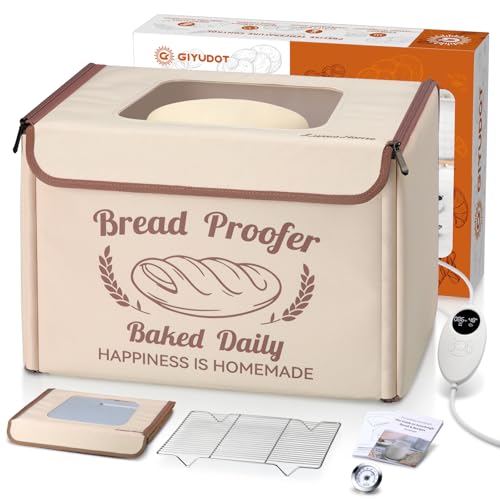
- 50–113°F range with a 48-hour timer
- NTC sensor monitors and maintains air temperature
- 36-liter interior with rack and humidor included
Best For: Bakers prioritizing temperature consistency and batch capacity
Best Viewing Window
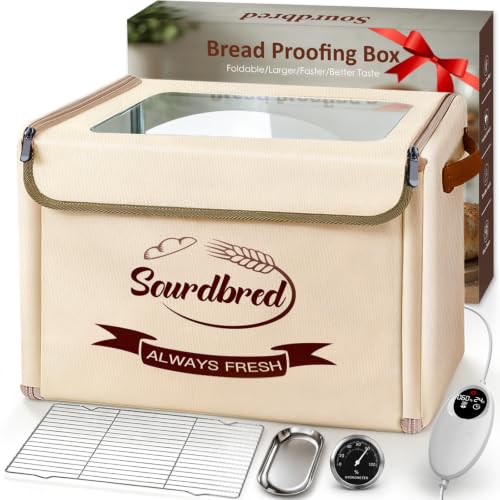
- Large 12.8 × 9-inch acrylic viewing window
- 66–108°F control with a 1–48-hour timer
- Folds to about 2 inches for compact storage
Best For: Bakers wanting roomy capacity and easy progress monitoring
Best Overall – Brod & Taylor 6L Proofing Containers, 2-Pack
For bakers comparing bread proofing boxes for small batches, the Brod & Taylor set offers a practical container-based approach. Each translucent, lidded box holds up to 3,000 grams of dough, includes volume markings for tracking rise, and supports mixing, folding, and proofing in one place.
Best For: Home bakers who want two durable containers for sourdough, bread, or pizza dough.
Pros:
- Two 6-liter containers provide useful capacity for batch flexibility.
- Translucent walls and volume markings make dough growth easy to monitor.
- Snap-on lids help retain moisture and prevent a dry dough skin.
- Dishwasher-safe, freezer-friendly polypropylene is designed for repeated use.
Cons:
- The rectangular containers may take more shelf space than round bowls.
- The set is designed for dough storage and proofing rather than active temperature control.
This is a strong all-purpose choice when you want straightforward rise tracking, easy cleaning, and enough room for substantial dough batches without relying on towels or plastic wrap.
Best Temperature Control – Bread Proofer Warming Box
Among bread proofing boxes for small batches, this warming box stands out for its adjustable environment. It provides temperature control from 50 to 113°F, a sensor for monitoring the proofing body, and a timer that can run for up to 48 hours.
Best For: Bakers who want controlled proofing temperatures and timed fermentation for one standard proofing bowl.
Pros:
- Adjustable 50–113°F range supports bread, sourdough, and other fermentation uses.
- Temperature sensor and LED display show the monitored proofing temperature.
- Auto-off timer can be set from 0 to 48 hours to help manage fermentation.
- Foldable vinyl enclosure is intended to be wiped clean with a damp cloth.
Cons:
- Its 15.75-by-13-by-9.8-inch footprint needs dedicated counter or storage space.
- The open-top design may provide less containment than a lidded dough container.
- It is sized for one standard proofing bowl rather than multiple separate containers.
This model makes the most sense when ambient kitchen temperatures vary and you prefer setting a target temperature and timer instead of relying on room conditions.
Best Value Set – Zopnny 3-Pack Pizza Dough Proofing Boxes
For shoppers seeking bread proofing boxes for small batches, the Zopnny three-pack provides multiple stackable trays for portioned dough. The vented lids help retain surface moisture without creating an airtight seal, making the boxes especially practical for pizza dough preparation.
Best For: Home pizza makers who proof several dough portions at once and need stackable storage.
Pros:
- Three boxes allow multiple dough portions to proof separately.
- Large 17.32-by-12.63-inch trays are suited to pizza dough and other foods.
- Vented snap-on covers help keep dough surfaces moist while allowing gases to escape.
- Basins stack when covers are removed to save storage space.
Cons:
- The boxes are vented rather than airtight, so they may be less suited to sealed storage.
- The trays are relatively wide and may not fit compact refrigerator shelves.
- They do not provide built-in temperature or humidity control.
This set is a useful pick for portioned pizza dough and casual bread proofing when quantity and stackability matter more than precise environmental control.
Best Foldable Proofer – MQUPIN Temperature-Controlled Proofing Box
This MQUPIN model is a compelling option among bread proofing boxes for small batches when storage space and environmental control are priorities. Its foldable 35-liter design combines adjustable heating from 68 to 131°F with a humidity gauge, countdown timer, clear window, and included water pan.
Best For: Compact kitchens that need a foldable, temperature-controlled setup for dough and other fermentation projects.
Pros:
- Digital control offers temperature adjustment with stated ±1°F precision.
- A humidity gauge and water pan help monitor and manage the proofing environment.
- 0–99-hour timer automatically stops heating when the countdown ends.
- Folds flat and includes a clear window, storage pockets, and a stainless steel bracket.
Cons:
- Its 15.7-by-11.8-by-11.8-inch size may be larger than needed for a single small loaf.
- It requires setup and access to power, unlike a passive lidded container.
- The soft-sided construction may be less rigid than a hard proofing box.
Choose this proofer if you want a more controlled fermentation chamber that can fold away after use, particularly for sourdough, pizza, yogurt, or kombucha projects.
Best Space-Saving Set – Collapsible Silicone Dough Proofing Boxes
For bakers comparing bread proofing boxes for small batches, this four-piece silicone set is designed for portioned dough rather than one large batch. Each 1,000 ml container holds up to about 300 g of dough, making it a practical fit for individual pizza portions and compact kitchen storage.
Best For: Home pizza bakers and small-batch dough makers who want multiple individual containers that collapse flat.
Pros:
- Four individual containers support separate dough portions and stack for storage.
- Airtight lids help retain moisture and prevent a surface skin from forming.
- Food-grade silicone is freezer-, refrigerator-, microwave-, and dishwasher-safe within the stated temperature range.
- Collapsible design reduces each container to about 1.2 inches tall when stored.
Cons:
- Each container is sized for about 300 g of dough, so larger batches may require multiple boxes.
- These containers are not intended for oven use.
This set is especially convenient when you want to divide dough ahead of time for several 10- to 12-inch pizzas. Its main advantage is flexible, space-efficient storage rather than temperature-controlled proofing.
Best Temperature-Controlled Option – Folding Heated Bread Proofing Box
This folding heated proofer is a strong option for bread proofing boxes for small batches when ambient kitchen temperatures are inconsistent. Its adjustable 50-113°F range, three heating zones, and long timer provide more control than a passive dough container, while the interior is sized to fit one standard proofing bowl.
Best For: Sourdough bakers and small-batch fermenters who want adjustable warmth, timed proofing, and fold-flat storage.
Pros:
- Temperature adjusts from 50-113°F, with a timer of up to 48 hours.
- Three heating zones are designed to provide even warming.
- Insulated construction helps maintain a stable interior temperature.
- Viewing window lets you monitor dough without opening the box.
Cons:
- The interior is described as fitting one standard proofing bowl, limiting simultaneous batch size.
- It requires an electrical setup, unlike standalone silicone containers.
Choose this model if repeatable fermentation conditions matter more than having several separate dough compartments. The folding body and viewing window make it practical for kitchens where storage space and easy monitoring are priorities.
Best Versatile Compact Proofer – Heated Folding Fermentation Box
For bread proofing boxes for small batches in apartments, RVs, or compact kitchens, this heated folding model combines a broad 50-130°F range with a 24-hour timer. It is designed to accommodate one large mixing bowl, a banneton, or multiple jars, making it useful beyond bread dough.
Best For: Small-kitchen bakers who need a compact electric proofer for dough, starters, yogurt, or other low-temperature fermentation tasks.
Pros:
- 50-130°F control and a Celsius/Fahrenheit switch suit varied recipes.
- 24-hour timer with audible alarm helps signal the end of a proofing cycle.
- Three-sided heat, an NTC sensor, and automatic overheat protection support controlled warming.
- Folds flat and is designed to fit one large bowl, banneton, or multiple mason jars.
Cons:
- The 24-hour timer is shorter than the 48-hour timer offered by some proofing boxes.
- Its compact capacity is intended for small batches rather than multiple large bowls.
This is a versatile choice when you want one compact appliance for bread, pizza dough, starter maintenance, and other fermentation projects. Its wider temperature range is useful, but its one-bowl format remains best suited to modest batches.
Best All-in-One Kit – Foldable 9-Inch Bread Proofer
For bakers comparing bread proofing boxes for small batches, this foldable model stands out as a ready-to-use kit. It offers three heating zones, adjustable temperatures from 68–131°F, a timer of up to 99 hours, and included sourdough tools for getting started quickly.
Best For: Home bakers who want a broad temperature range, extended timing, and a complete sourdough accessory set.
Pros:
- Three heating zones and five-layer insulation are designed to promote stable, even warming.
- Includes a 9-inch silicone proofing basket, lame with five blades, scraper, rack, and recipe ebook.
- Folds flat for storage and includes a viewing panel for monitoring dough.
- Can also be used for pizza dough, yogurt, kefir, and kombucha.
Cons:
- The included 9-inch basket may be less suitable for especially large loaves.
- Its 11.8 × 15.7 × 11.8-inch footprint still requires dedicated counter space while in use.
This is a versatile choice when you value included equipment and a long timer. Its higher temperature ceiling also gives it more flexibility than many proofing boxes for small batches.
Best Precise Control – GIYUDOT Folding Dough Proofer
This GIYUDOT model is a strong option for bread proofing boxes for small batches when temperature stability matters. Its NTC sensor, three heating zones, 50–113°F range, and 48-hour timer provide practical control for dough and other fermentation projects.
Best For: Bakers who want sensor-based temperature monitoring, a spacious interior, and a compact foldable design.
Pros:
- NTC temperature sensing continuously monitors the air temperature inside the proofer.
- Offers a 50–113°F temperature range and timer settings up to 48 hours.
- The 16 × 12 × 12-inch interior can accommodate multiple dough batches.
- Includes a stainless steel rack, humidor, manual, and sourdough guide with recipes.
Cons:
- The 113°F maximum is lower than some competing models.
- Only one shelf is listed, which may limit vertical organization.
With a 36-liter capacity and precise sensor-based control, this model balances batch space with temperature management. The included humidor is useful when you want added humidity during proofing.
Best Viewing Window – Extra-Large Folding Proofer
For bread proofing boxes for small batches that need extra room, this model combines a large interior with a slim folding profile. It provides three heating areas, a 66–108°F temperature range, a 1–48-hour timer, and a large acrylic viewing window.
Best For: Bakers who want easy visual monitoring, flexible fermentation uses, and generous space for bowls or multiple containers.
Pros:
- Extra-large 12.8 × 9-inch viewing window makes it easier to observe proofing.
- Three heating areas and five-layer construction support steady warming and insulation.
- Folds to about 2 inches thick and has two handles for storage and transport.
- Includes a metal rack, water tray, and user guide; supports dough, yogurt, kombucha, butter, and chocolate.
Cons:
- The 66–108°F range is narrower than the ranges of some alternatives.
- Hand-wash care may require more maintenance than a fully rigid appliance.
- Its extra-large size may be more space than needed for a single small loaf.
This proofer is appealing when visibility and capacity are more important than the widest temperature range. Its water tray and flexible size make it useful for both dough proofing and other kitchen fermentation tasks.
How We Picked the Best Bread Proofing Boxes for Small Batches
We compared the selected proofing boxes by capacity, temperature range, timer controls, portability, construction, and ease of cleaning. Because small-batch bakers often have limited counter and storage space, we also considered folding designs, stackable containers, removable racks, and whether each option suits dough balls, loaf dough, or both.
Temperature control received particular attention. A box with adjustable heat can make fermentation more predictable, but simple insulated containers may be preferable when you want a compact, low-maintenance solution. Product descriptions and listed features were weighed against common bread-making needs rather than appearance alone.
Quick Comparison
- Best for simple dough storage: Stackable or lidded proofing containers are easy to use and do not require electricity.
- Best for controlled fermentation: Electric warming boxes with adjustable temperature and timers offer more repeatable conditions.
- Best for limited storage: Folding proofers collapse when not in use and are convenient for occasional bakers.
- Best for multiple dough balls: Multi-pack containers and larger racks make it easier to proof pizza portions or several small loaves.
Key Buying Factors for Bread Proofing Boxes for Small Batches
Capacity and Shape
Check the stated dough capacity, internal dimensions, and headroom. A container should allow dough to expand without touching the lid. Rectangular boxes are efficient for pizza dough balls, while taller proofers may work better for loaf-shaped dough and baskets.
Temperature and Timer Controls
For sourdough and enriched dough, adjustable temperature can help compensate for a cool kitchen. Look for a usable range, clear controls, and a timer that matches your fermentation schedule. Keep in mind that a warmer box should not replace checking dough volume and texture.
Cleaning and Moisture Management
Food-contact surfaces, removable shelves, smooth interiors, and secure lids simplify cleanup. Proofing creates humidity, so inspect how condensation is handled and whether accessories can be wiped down safely.
Storage and Portability
Folding units are useful in small kitchens, but confirm how quickly they assemble and whether the rack remains stable. Rigid containers take more storage space but are often faster to grab for frequent baking.
Who Should Buy Which Bread Proofing Boxes for Small Batches?
Choose a basic container set if you mainly proof pizza dough or small batches at room temperature and want affordability and easy cleanup.
Choose a folding temperature-controlled box if your kitchen temperature varies, you bake sourdough regularly, or you need a unit that stores compactly between uses.
Choose a larger proofer with a rack if you proof multiple portions, use baskets, or want room for different dough vessels at the same time.
Whichever style you choose, prioritize accurate capacity and manageable temperature control over extra accessories. For small batches, a box that fits your normal dough quantity and is easy to clean is more useful than one that simply offers the largest advertised interior.