If you need a commercial meat grinder for bones, the right model should balance cutting power, feed rate, and durability. Not every grinder can handle cartilage, soft bones, or repeated commercial use.
This guide helps you narrow the field fast by focusing on motor strength, grinder size, and the type of bone-processing work each machine is built for.
Best 10 Commercial Meat Grinder for Bones Picks for 2026
Bone-Crushing Compact Grinder
Electric Bone Crusher Meat Grinder

- 200–230 kg/h output for fast prep
- Handles fish, chicken, and duck bones
- Cast iron body with emergency stop and casters
Best For: Poultry, fish, and small-bone processing in commercial settings
High-Output Electric Mincer

- 750W / 1HP motor with up to 552 lbs/h output
- Includes blades, plates, stuffing tubes, and Kibbe kit
- ETL approved with cooling and anti-vibration design
Best For: Busy kitchens needing a powerful meat grinder, not bones
Heavy-Duty Bone Grinder
Huanyu Commercial Meat Grinder

- Grinds poultry, ribs, and small game bones
- 1.3HP motor with touchscreen speed control
- Dishwasher-safe stainless steel parts
Best For: Pet food and hunting prep that requires bone grinding
Reliable Home-Grade Mincer

- 0.5 HP stainless steel grinder for small batches
- About 7 lbs per minute with quiet operation
- Includes plates, knife, stomper, and stuffing tubes
Best For: Home kitchens needing a durable meat and sausage grinder
Heavy-Duty Countertop Pick
Newhai 1.3HP Commercial Meat Grinder Machine, 950W

- 950W motor with 370 lb/h claimed output
- Handles soft bones like chicken and fish bones
- 304 stainless steel build with 3 plate sizes
Best For: Small restaurants and countertop prep with soft-bone grinding
High-Power Feed-Style Grinder
Electric Meat Grinder Bone Crusher Machine 2.2KW

- 2.2KW motor with about 400 lb/h output
- Grinds fish, chicken, and duck bones
- Stainless steel hopper and wheeled base
Best For: High-output soft-bone processing and animal-feed prep
Reliable Small-Farm Option
Commercial Meat Grinder #12C, 0.9HP

- 1.0HP copper motor with up to 1100W peak power
- Oversized hopper for larger meat batches
- Includes 6mm/8mm plates, blades, and stuffing tubes
Best For: Hunters, small farms, and home butchers focused on meat prep
Heavy-Duty #12 Grinder
Barton Commercial #12 Electric Meat Grinder

- 1100W motor for fast meat grinding
- Stainless steel blade and food-contact parts
- #12 head for consistent commercial-style output
Best For: Butcher shops and commercial kitchens needing frequent meat prep
High-Capacity Mincer
Commercial Meat Grinder, 1100W Electric Meat Grinder Heavy Duty
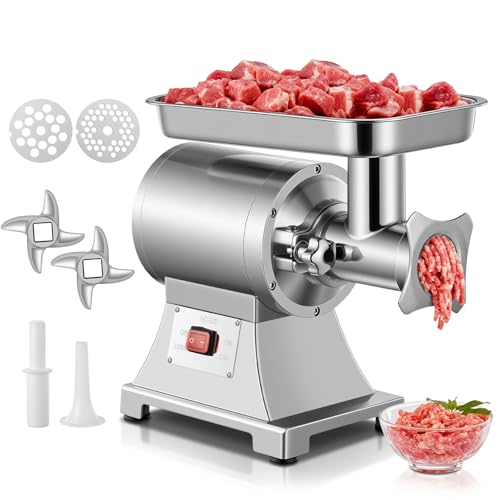
- 330 lbs per hour with a 1100W motor
- Two blades and two cutting plates included
- Built for kitchens, butcher shops, and sausage shops
Best For: High-volume users who need fast, continuous grinding
Bone-Capable #32 Grinder

- Handles chicken cartilage, chicken bones, and wings
- 1100W / 1.5HP motor with 21 lbs per minute capacity
- Stainless steel build with anti-vibration feet and overload protection
Best For: Users who need the strongest bone-capable option in this roundup
Bone-Crushing Compact Grinder – Electric Bone Crusher Meat Grinder
If you need a commercial meat grinder for bones that can also handle routine prep, this unit is built for fast processing of chicken, duck, fish, beef, lamb, pork, and chili peppers. Its screw design is meant to mince efficiently, while the machine’s compact footprint, caster wheels, and safety features make it practical for busy workspaces.
Best For: Shops or kitchens needing a high-output grinder for fish bones, chicken bones, duck bones, and small poultry bones.
Pros:
- Processes about 200–230 kg per hour for high-volume output
- Handles fish bones, chicken bones, duck bones, and small poultry bones
- Thick-coated cast iron body with stainless steel feed hopper and safety cover
- Emergency stop switch and four casters improve usability and control
Cons:
- Not suitable for beef bones or other hard bones
- Ingredients must be cut into small pieces before feeding
- Requires 220V power
For buyers focused on bone grinding within a narrower, poultry-and-fish range, this model offers a useful balance of speed, durability, and mobility. The output tray and longer feed path add convenience, but the hard-bone restriction is important to respect.
High-Output Electric Mincer – VEVOR #12 Meat Grinder
This commercial meat grinder for bones is better suited to meat-only jobs, but it stands out for heavy daily prep in restaurants, butcher shops, and sausage-making setups. With a 750W / 1HP motor, a 3-stage auger, and a full accessory kit, it’s designed for consistent grinding of chicken, pork, beef, fish, vegetables, and chili peppers.
Best For: Commercial kitchens that need a strong, versatile grinder for meat and sausage prep, not bone grinding.
Pros:
- Up to 552 lbs/h with a 750W / 1HP pure copper motor
- Includes two blades, two plates, sausage tubes, and a Kibbe kit
- Dishwasher-safe removable parts simplify cleanup
- ETL approved with anti-vibration foot pads and cooling system
Cons:
- Not suitable for bones or frozen meat
- Heavier commercial build may be more than some users need
- Best performance is centered on meat and soft ingredients only
If your priority is throughput and versatility rather than bone processing, this model is a solid commercial option. It has the attachments and stability features that matter for everyday shop use, but buyers specifically seeking bone grinding should look elsewhere.
Heavy-Duty Bone Grinder – Huanyu Commercial Meat Grinder
If you want a commercial meat grinder for bones aimed at pet food and raw prep, this Huanyu model is built for that job. It is advertised to crush and grind most bones, including poultry, ribs, and small game, while the touchscreen control lets you adjust speed for softer meat or harder material.
Best For: Pet-food makers, hunters, and commercial users who need bone-grinding capability with adjustable control.
Pros:
- Grinds most bones, including poultry, ribs, and small game
- 1.3HP pure copper motor handles up to 4.4 lbs per minute
- Touchscreen offers 5 RPM adjustments plus on/off/reverse control
- Stainless steel blades, housing, and dishwasher-safe parts aid cleanup
Cons:
- Designed for pet food and grinding, not human serving use
- Capacity is smaller than some larger commercial units
- Best fit is bone grinding and prep, not bulk meat-only throughput
This is the most directly bone-focused option in the group, with controls and construction that suit repeated use. Its compact, lightweight design also makes it easier to place in tighter spaces than many traditional commercial grinders.
Reliable Home-Grade Mincer – LEM BigBite #8 Meat Grinder
For shoppers looking for a commercial meat grinder for bones, this LEM model is not the bone-grinding answer, but it is a dependable option for meat and sausage prep. Its stainless steel construction, 0.5 HP motor, and quiet operation make it a practical fit for home kitchens that process small to medium batches.
Best For: Home users who want a durable grinder for meat, sausage, and pet food scraps, without bone grinding.
Pros:
- Stainless steel build with a powerful 0.5 HP motor
- Processes about 7 lbs of meat per minute
- Includes three plates, knife, stomper, and stuffing tubes
- Quiet, noise-dampening design for home use
Cons:
- Not for bones
- Less suited to high-volume commercial bone applications
- Smaller batch capacity than larger shop grinders
This grinder is best viewed as a sturdy meat-processing tool rather than a bone crusher. If your needs center on burgers, sausage, or repurposing meat scraps, it offers a strong value with long-term support and a five-year warranty.
Heavy-Duty Countertop Pick – Newhai 1.3HP Commercial Meat Grinder Machine, 950W
If you want a commercial meat grinder for bones that can handle softer animal parts without taking over the whole kitchen, the Newhai 1.3HP model is built for exactly that kind of work. Its 950W copper motor, stainless-steel body, and included 3/6/8mm plates make it a practical fit for small restaurants, countertop prep, and frequent batch grinding.
Best For: Small restaurants, countertop commercial prep, and users who need to grind chicken or fish bones along with meat.
Pros:
- 950W, 1.3HP motor with fast heat dissipation and stable performance
- Can handle soft bones like chicken and fish bones, plus meat and vegetables
- 304 stainless steel construction for durability, rust resistance, and easier cleaning
- Includes 3mm, 6mm, and 8mm plates plus a sausage stuffer tube
Cons:
- Not intended for hard bones
- Heavier unit at about 46 lb, so it is less portable
- 110V countertop format may be less ideal for very high-volume facilities
This is a solid value if your workflow includes soft bone grinding and you want a stainless commercial unit with useful accessories. The claimed 370 lb/h output and compact footprint make it a strong fit for efficient daily prep.
High-Power Feed-Style Grinder – Electric Meat Grinder Bone Crusher Machine 2.2KW
For buyers searching for a commercial meat grinder for bones in an animal-feed style setup, this 2.2KW machine stands out for sheer output and a stainless-steel hopper design. It is designed to process chicken, duck, fish, beef, lamb, and vegetables, but the notes clearly limit bone grinding to fish, chicken, and duck bones only.
Best For: Animal feed processing, high-output grinding, and users who need to handle soft bones in a heavier-duty machine.
Pros:
- Powerful 2.2KW motor with about 400 lb per hour claimed output
- Stainless steel feed and discharge hopper for a more durable setup
- Can grind fish, chicken, and duck bones, plus meat and vegetables
- Four casters make the machine easier to move in a work area
Cons:
- Cannot grind beef bones or other hard bones
- Requires 220V power, which may limit placement options
- Material must be cut into small pieces before processing
If your priority is throughput and you mainly process soft bones or mixed animal-feed materials, this model is built around that use case. The stainless body and wheeled base add convenience, but the hard-bone limitations are important to keep in mind.
Reliable Small-Farm Option – Commercial Meat Grinder #12C, 0.9HP
This commercial meat grinder for bones is aimed more at meat processing than hard-bone work, but it is a practical choice if you need a dependable grinder for home butchering, small farms, or game processing. The 1.0HP copper motor, oversized hopper, and included plates and blades make it useful for batch grinding beef, pork, lamb, venison, and deer.
Best For: Hunters, small farms, and home butchers looking for a sturdy grinder for meat and sausage prep.
Pros:
- High-torque 1.0HP copper motor with peak power up to 1100W
- Oversized hopper supports larger batches of prepared meat
- Includes 6mm and 8mm plates, 2 stainless steel knives, and stuffing tubes
- Detachable parts are designed for easier washing and cleanup
Cons:
- Notes do not claim bone-grinding ability
- Less specialized for heavy commercial bone processing than bone-focused units
- Built around 110V operation, which may not suit all commercial setups
For buyers who need a meat-first grinder with strong support for batching and sausage making, this model is appealing. Its feature set is practical and straightforward, but it is not the right pick if your main goal is breaking down bones.
Heavy-Duty #12 Grinder – Barton Commercial #12 Electric Meat Grinder
If you want a commercial meat grinder for bones that also handles everyday prep, this Barton #12 model is built for high-volume meat processing with a strong 1100W motor and stainless steel cutting parts. It is aimed at users who need reliable grinding for beef, pork, chicken, venison, and sausage making in home or commercial settings.
Best For: Butcher shops, restaurants, hunters, and small commercial kitchens that need a sturdy #12 grinder for frequent meat prep.
Pros:
- 1100W motor supports fast grinding for a wide range of meats.
- Stainless steel blade and food-contact components add durability and corrosion resistance.
- #12 grinding head is designed for consistent, professional-quality output.
- Removable parts make cleanup easier after use.
Cons:
- Heavier unit at 47 pounds, so it is less portable.
- Short 60-day manufacturer warranty.
Overall, this is a practical pick if you need a durable commercial-style grinder for regular meat processing and sausage stuffing, but it is more focused on general grinding than on specialized bone-heavy work.
High-Capacity Mincer – Commercial Meat Grinder, 1100W Electric Meat Grinder Heavy Duty
For buyers comparing a commercial meat grinder for bones and tough prep, this 1100W unit stands out for its 330 lbs-per-hour processing rate and heavy-duty build. It handles pork, beef, venison, chicken, garlic, chili, and vegetables, making it a versatile option for busy kitchens and meat rooms.
Best For: Restaurants, butcher shops, and sausage shops that need a high-output grinder for continuous use.
Pros:
- 1100W pure copper motor processes up to 330 lbs of meat per hour.
- Includes two blades and two cutting plates for flexible grinding setups.
- Food-grade stainless steel hopper plate, grinding head, and feed screw.
- Simple assembly and disassembly help streamline cleaning.
Cons:
- Cleaning requires careful low-temperature soapy water washing for many parts.
- Aluminum body may not feel as premium as all-stainless alternatives.
This model is geared toward throughput and versatility, so it makes sense when you need dependable daily grinding rather than a compact countertop machine.
Bone-Capable #32 Grinder – VEVOR Commercial Meat Grinder
If your priority is a commercial meat grinder for bones, this VEVOR #32 model is the most directly suited of the group because it is stated to grind chicken cartilage, chicken bones, chicken wings, frozen meat, and fresh meat. Its 1100W / 1.5HP motor, large capacity, and commercial-grade build make it a strong fit for demanding prep work.
Best For: Home kitchens and commercial users who need a grinder that can handle cartilage, chicken bones, and frozen meat.
Pros:
- Explicitly listed for chicken cartilage, chicken bones, and chicken wings.
- 1100W / 1.5HP motor processes up to 21 lbs per minute.
- Three grinding plates and three sausage stuffing tubes expand versatility.
- Stainless steel housing, anti-vibration feet, and overload protection support heavy use.
Cons:
- Large and heavy at 59.3 pounds.
- Main body is not dishwasher-safe and should not be immersed or rinsed.
For tougher material like cartilage and small poultry bones, this is the clearest match here, especially if you want commercial power with stability and accessory variety.
How We Picked the Best Commercial Meat Grinder for Bones
We prioritized machines with enough motor power and build quality to handle demanding grinding tasks, especially when bones, connective tissue, or dense animal protein are part of the job. We also looked at throughput, grinder size, materials, and whether the design better fits pet food, animal feed, or general commercial prep.
Because a Commercial Meat Grinder for Bones can vary widely in capability, we favored models with clearer heavy-duty positioning and practical features like multiple grinding plates, larger feed openings, and stainless steel contact parts.
Quick Comparison
Use grinder size as a fast shorthand: smaller #8 and #12 models are usually better for moderate output and tighter spaces, while larger units such as #32 tend to suit higher-volume operations. Higher wattage or horsepower can help, but motor design, gearing, and duty cycle matter just as much.
Key Buying Factors for a Commercial Meat Grinder for Bones
Motor Power and Duty Cycle
Bones and dense tissue place a much heavier load on the motor than standard meat. Look for strong horsepower ratings, but also check whether the grinder is designed for continuous commercial use rather than short home-style sessions.
Grinder Size and Output
The number attached to the grinder head usually hints at capacity and workflow. A #12 grinder is often a versatile middle ground, while larger heads can move more product faster and may be better for feed production or higher-volume processing.
Bone Type and Intended Use
Most commercial grinders are better suited to soft or small bones, cartilage, and trimmed poultry parts than hard beef bones. If your main goal is pet food or animal feed, prioritize models explicitly marketed for bone crushing or feed processing.
Materials and Cleaning
Stainless steel components, removable parts, and straightforward disassembly make daily cleanup easier and help support food safety. For commercial work, durability and sanitation are just as important as raw power.
Accessories and Grind Flexibility
Multiple plates or cutting options give you more control over texture. That matters when you need coarse output for feed or a finer grind for mixed recipes.
Who Should Buy Which Commercial Meat Grinder for Bones?
If you want the highest output for animal feed or bone-in processing, choose a larger, more powerful model with explicit bone-crushing capability. If you need a versatile commercial grinder for mixed meats and occasional soft-bone work, a mid-size #12 unit is often the smarter value.
For smaller operations, butcher setups, and limited-counter spaces, compact commercial models can still deliver strong results as long as you stay within their recommended workload. Match the machine to your bone type, batch size, and cleaning routine, and you’ll get far better performance and longer equipment life.