The best commercial citrus juicer helps you produce fresh juice quickly while reducing hand strain, mess, and inconsistent results. This roundup compares manual presses and electric machines for cafés, bars, restaurants, juice counters, and high-volume home use.
We considered extraction speed, construction, cleanup, fruit versatility, countertop stability, and operating demands so you can choose a citrus juicer commercial setup that matches your daily workload.
Best 10 Citrus Juicer Commercial Picks for 2026
Best Manual Commercial Citrus Juicer
Hamilton Beach 932 Manual Citrus Juicer

- 2,000-pound-force manual extraction
- Acid-resistant metal and enamel construction
- NSF certified with stable Sure Grip feet
Best For: Bars and restaurants seeking powerful manual pressing
Best Easy-Use Commercial Citrus Juicer
Breville BCP600SIL Citrus Press
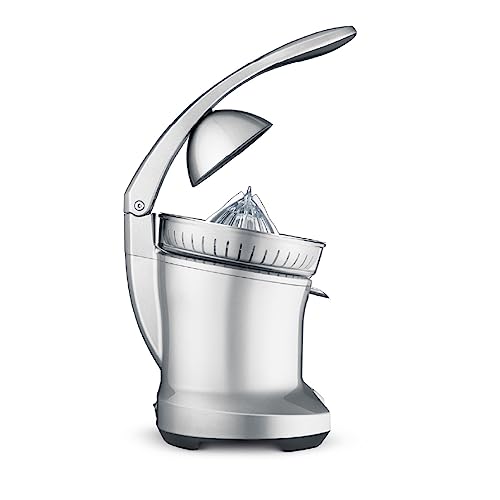
- Motorized one-handed operation
- Cone accommodates limes through grapefruits
- Dishwasher-safe removable parts
Best For: Convenience-focused kitchens and beverage stations
Best Compact Commercial Citrus Juicer
Waring BJ120C Compact Electric Juicer

- Compact footprint for small counters
- Up to 120 oranges per hour
- Universal reamer with stable die-cast base
Best For: Small bars and restaurants needing electric juicing
Best Premium Commercial Citrus Juicer
Breville 800CPXL Citrus Press Pro
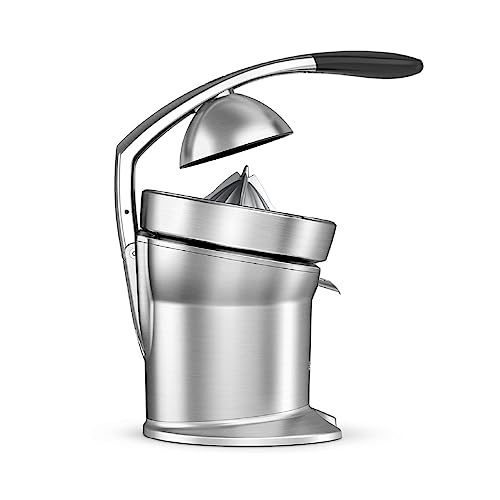
- Power-assisted active-arm lever
- Acid-resistant die-cast stainless steel cone
- Adjustable pulp control and dishwasher-safe parts
Best For: Cafés and beverage stations wanting assisted pressing
Classic Commercial Workhorse
Sunkist J-1 Electric Citrus Juicer

- 20-gallon-per-hour stated ability
- Three interchangeable extracting bulbs
- Chrome-plated metal construction
Best For: High-volume citrus stations
Quiet High-Volume Pick
YUANHAO Electric Citrus Juicer
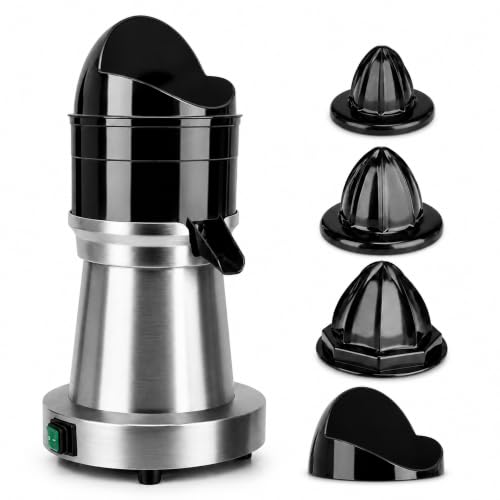
- Three size-matched interchangeable reamers
- Splash guard and pulp filter
- Dishwasher-safe removable parts
Best For: Bars and cafes seeking convenient electric juicing
Electricity-Free Press
CO-Z Commercial Manual Citrus Juicer

- Hand-powered cast-iron construction
- 304 stainless steel fruit-contact parts
- Removable strainer and nonslip suction base
Best For: Made-to-order juice and cocktail service
High-Throughput Electric Pick
Commercial Orange Juicer Machine

- Up to 20 oranges per minute
- Handles several citrus fruits and pomegranates
- Detachable, easy-clean components
Best For: Busy commercial beverage operations
Classic Manual Press Pick
ROVSUN Cast Iron Citrus Juicer

- Lever-assisted heavy-duty pressing
- 304 stainless steel strainer
- Suitable for multiple citrus fruits
Best For: Restaurants and bars favoring manual control
Stable Countertop Press Pick
Eurolux Heavy-Duty Citrus Squeezer

- Heavy-duty cast-iron lever press
- Dishwasher-washable fruit-contact parts
- Includes a 15-ounce stainless steel cup
Best For: Stable countertop, small-batch juicing
Best Manual Commercial Citrus Juicer – Hamilton Beach 932 Manual Citrus Juicer
For a commercial citrus juicer that prioritizes control and extraction, the Hamilton Beach 932 uses a manual lever capable of exerting up to 2,000 pounds of force. Its acid-resistant enamel finish, stable feet, and NSF certification suit demanding food-service environments.
Best For: Bars, restaurants, and prep stations that want powerful manual pressing without a motor.
Pros:
- High-force lever helps maximize juice while limiting skin oil and pulp residue.
- Metal construction and enamel finish resist citrus-acid wear.
- Sure Grip feet help prevent tipping during use.
- Removable stainless steel strainer cone and ABS funnel simplify cleaning.
Cons:
- Manual operation requires physical effort for repeated batches.
- Hand-wash-only care is less convenient than dishwasher-safe alternatives.
- Its 8-ounce capacity may require frequent emptying.
The Hamilton Beach 932 is a strong choice when dependable manual extraction, stability, and food-service certification matter more than automated speed.
Best Easy-Use Commercial Citrus Juicer – Breville BCP600SIL Citrus Press
The Breville BCP600SIL is a practical commercial citrus juicer for users who want motorized pressing with minimal effort. Its one-size-fits-all cone handles fruit from small limes to large grapefruits, while the drip-stop spout helps reduce mess.
Best For: Kitchens and beverage stations that value simple one-handed operation and easy cleanup.
Pros:
- Motorized operation provides effortless pressing.
- Universal cone and fruit dome grip different citrus sizes.
- Dual-switch safety system prevents spinning until the arm is properly lowered.
- Removable juicing parts are dishwasher safe.
Cons:
- Its 110-watt motor is less heavy-duty on paper than some commercial-focused options.
- Plastic construction may feel less rugged than metal-bodied presses.
- It has one speed and a 1-liter capacity.
Choose this Breville when convenience and cleanup are central priorities. The automatic press and dishwasher-safe components make it approachable for regular citrus service.
Best Compact Commercial Citrus Juicer – Waring BJ120C Compact Electric Juicer
The Waring BJ120C is a compact commercial citrus juicer designed for bars and restaurants with limited counter space. Its universal reamer handles different citrus fruits, and the manufacturer lists capacity of up to 120 oranges per hour.
Best For: Small commercial workspaces that need electric citrus service in a compact footprint.
Pros:
- Compact 7.25-inch square footprint suits tight counters.
- Universal reamer works with assorted citrus fruits.
- Rated for up to 120 oranges per hour.
- Heavy-duty die-cast base and vibration-dampening feet support stable, quieter operation.
Cons:
- The 1-quart capacity may require refilling or emptying during busy service.
- It offers only one speed.
- Its listed 150-watt power may not suit every high-volume setup.
The BJ120C balances a small footprint with a stated 120-oranges-per-hour capacity, making it a sensible option when counter space is as important as throughput.
Best Premium Commercial Citrus Juicer – Breville 800CPXL Citrus Press Pro
The Breville 800CPXL is a premium commercial citrus juicer built around a power-assisted lever and durable die-cast stainless steel components. Its Quadra-Fin cone is designed to extract juice from citrus of different sizes, while adjustable pulp control adds serving flexibility.
Best For: Home bars, cafés, and beverage stations wanting an assisted press with a durable metal build.
Pros:
- Power-assisted active-arm lever reduces pressing effort.
- Quadra-Fin acid-resistant cone supports extraction across citrus sizes.
- Die-cast body and cone resist corrosive citric acid.
- Dishwasher-safe removable parts and drip-stop spout simplify cleanup.
Cons:
- Its 800-milliliter capacity is smaller than the Waring’s 1-quart capacity.
- The 10.6-pound stainless steel unit may be less convenient to move.
- It has one speed and a one-year limited warranty.
The 800CPXL is a strong fit for users who want the feel of a manual press with powered assistance, plus acid-resistant construction and adjustable pulp control.
Classic Commercial Workhorse – Sunkist J-1 Electric Citrus Juicer
For buyers seeking a citrus juicer commercial operations can rely on, the Sunkist J-1 combines a corded 200-watt motor with a stated 20-gallon-per-hour ability. Its chrome-plated metal construction and three interchangeable extracting bulbs make it suited to repeated citrus preparation.
Best For: Juice bars, cafes, and food-service settings that need high stated throughput and interchangeable citrus extractors.
Pros:
- Stated ability to process up to 20 gallons per hour.
- Includes three interchangeable extracting bulbs for citrus fruits.
- Chrome-plated metal construction with dishwasher-safe care instructions.
- Portable design despite its 31-pound weight.
Cons:
- At 31 pounds, it is less convenient to move frequently.
- Its supplied specifications identify citrus fruits as the recommended use, limiting versatility outside citrus.
The J-1 is a substantial electric option for commercial buyers prioritizing capacity and a durable metal build. Its weight and citrus-focused design make it most appropriate for a dedicated workstation rather than occasional portability.
Quiet High-Volume Pick – YUANHAO Electric Citrus Juicer
This citrus juicer commercial buyers may consider for busy counters uses a 160-watt, 1400-RPM motor and three reamers sized for different fruit. A splash guard, pulp filter, and dishwasher-safe removable parts are designed to support cleaner, faster service.
Best For: Bars, restaurants, cafes, and home users who want electric citrus juicing with size-matched reamers and easier cleanup.
Pros:
- Three approximately 2.5-, 3.5-, and 4.5-inch reamers accommodate different fruit sizes.
- Stainless steel body and reinforced metal gears are intended for daily commercial use.
- Splash guard and pulp filter help contain spray and seeds.
- Removable reamers, pulp guard, and drip tray are dishwasher safe.
Cons:
- At 5 kg, it may be less convenient to relocate than lighter countertop models.
- The 160-watt rating is lower than some higher-powered commercial machines.
The YUANHAO emphasizes practical workflow features: multiple reamers, one-button operation, non-skid feet, and cleanup-friendly removable components. It is a balanced choice when convenience and controlled pulp handling matter alongside commercial construction.
Electricity-Free Press – CO-Z Commercial Manual Citrus Juicer
For buyers who prefer a citrus juicer commercial setup without a motor, the CO-Z uses a long lever and heavy-duty cast-iron frame to press citrus and pomegranates by hand. Its stainless steel strainer, suction base, and removable components support stable operation and straightforward cleanup.
Best For: Home kitchens, cafes, bars, and restaurants that want a manual countertop press without dependence on electricity.
Pros:
- Hand-powered design works without electricity.
- Cast-iron construction and a stated resistance of over 2300 psi support heavy-duty use.
- 304 food-grade stainless steel contacts fruit, with a removable strainer for seeds and pulp.
- Extra-long lever, rubber grip, nonslip suction base, and 5-inch funnel aid pressing stability.
Cons:
- Manual operation may be slower or more labor-intensive for continuous high-volume service.
- At 6 kg, it is not especially lightweight for a countertop press.
- Its listed capacity is 0.8 liters, smaller than a high-throughput electric system.
The CO-Z is a strong fit when simplicity, control, and no electrical connection are priorities. Its manual mechanism and broad fruit compatibility suit made-to-order servings, though larger operations may prefer an electric machine for sustained volume.
High-Throughput Electric Pick – Commercial Orange Juicer Machine
For businesses needing a citrus juicer commercial setup with steady output, this VEVOR electric model combines peeling, juicing, and filtering. Its 120W motor and textured juicing wheel are designed to process up to 20 oranges per minute, making it suited to busy beverage operations.
Best For: Grocery stores, restaurants, fruit shops, bars, beverage shops, and offices that need automated citrus juicing.
Pros:
- Processes up to 20 oranges per minute with a 120W motor.
- Accepts oranges, lemons, grapefruits, and pomegranates measuring 55–80 mm.
- 304 stainless steel and detachable parts support thorough cleaning.
- Automatic stop and a water-resistant power-switch cover add practical safety features.
Cons:
- At 81.4 pounds and over 30 inches tall, it requires a dedicated counter or floor space.
- Hand-wash care is specified rather than dishwasher cleaning.
- Its semi-automatic design still requires fruit loading and operational oversight.
This is the strongest choice here for volume and automation, provided your workspace can accommodate its substantial footprint.
Classic Manual Press Pick – ROVSUN Cast Iron Citrus Juicer
This ROVSUN is a practical citrus juicer commercial option for operators who prefer a manual press. The long lever amplifies pressure while the design avoids rubbing the rind, helping produce juice without the bitter rind taste associated with some extraction methods.
Best For: Restaurants, bars, supermarkets, parties, and households seeking a durable manual citrus press.
Pros:
- Heavy-duty cast-iron construction is designed for repeated use.
- 304 stainless steel strainer supports hygienic juice collection.
- Removable strainer cone and funnel make cleaning easier.
- Works with lemons, limes, oranges, grapefruits, and pomegranates.
Cons:
- Manual pressing is slower and more labor-dependent than an electric juicer.
- Hand-wash care is specified.
- Its 0.6-liter capacity may require frequent emptying during busy service.
Choose this model when simplicity, control, and rind-free manual extraction matter more than maximum throughput.
Stable Countertop Press Pick – Eurolux Heavy-Duty Citrus Squeezer
The Eurolux offers a compact citrus juicer commercial approach centered on a heavy-duty manual lever. Its stainless steel cup, removable fruit-contact parts, and suction-cup base make it convenient for countertop juicing and small-batch fresh juice service.
Best For: Countertop use in homes, cafés, bars, and other settings that need sturdy manual citrus pressing.
Pros:
- Cast-iron construction and lever design support repeated pressing with less effort.
- Fruit-contact parts can be removed and washed in the dishwasher.
- Included 15-ounce stainless steel cup collects juice directly.
- Suction cups help keep the press stable during use.
Cons:
- Manual operation does not match the throughput of an electric commercial machine.
- The 15-ounce cup requires emptying for larger batches.
- Its countertop footprint is larger than the listed ROVSUN dimensions.
This is a well-rounded manual choice for stable, convenient countertop pressing, especially when easy cleanup and an integrated cup are priorities.
How We Picked the Best Citrus Juicer Commercial
We focused on the factors that matter most in a working beverage operation: extraction performance, expected volume, durability, ease of cleaning, operator effort, and countertop footprint. The lineup includes lever-style manual presses for dependable, low-maintenance service and electric citrus presses for faster, more continuous production.
We also considered whether each machine can handle multiple fruit sizes, including lemons, limes, oranges, and grapefruits; whether removable parts simplify cleanup; and whether the design helps limit pulp, seeds, and splashing. Because commercial needs vary widely, no single juicer is ideal for every business.
Quick Comparison
- Best for quiet, low-volume service: Manual cast-iron presses are simple, sturdy, and do not require electricity.
- Best for cafés and bars: Compact motorized presses balance speed, convenience, and countertop efficiency.
- Best for higher-volume production: Electric commercial machines with larger capacities reduce repetitive manual work.
- Best for flexibility: Models with interchangeable cones or broad fruit compatibility adapt to different menus.
- Best for long-term value: Acid-resistant metal components, stable feet, and replaceable or removable parts can extend service life.
Key Buying Factors for a Citrus Juicer Commercial Setup
Capacity and Service Speed
Estimate how many drinks or juice orders you serve during your busiest period, not just over an entire day. Manual presses work well for made-to-order drinks and moderate demand, while electric models are better when staff must process many fruits continuously. Published capacity figures can vary with fruit size, operator technique, and preparation time.
Manual Versus Electric Operation
A manual press has fewer components, uses no power, and offers excellent control over extraction. It does require physical effort and counter space. Electric presses are faster and easier for repeated use, but they may create more noise, require access to an outlet, and need closer attention to motor duty cycles and cleaning.
Construction and Stability
Look for stainless steel or corrosion-resistant surfaces, a rigid frame, a comfortable handle, and non-slip feet or a secure base. Citrus juice is acidic, so finishes and parts that resist corrosion are especially important in daily commercial use.
Cleaning and Juice Quality
Removable strainers, cones, and reamers make routine sanitation easier. Check how quickly parts can be rinsed and whether pulp buildup is easy to remove. If your menu depends on clear juice, prioritize effective straining; if you value texture and speed, a more open extraction design may be preferable.
Who Should Buy Which Citrus Juicer Commercial?
Choose a manual press if you operate a small café, cocktail bar, food truck, or home bar and want reliable extraction with minimal maintenance. Choose a compact electric press if staff regularly prepare fresh citrus drinks and consistency matters more than absolute capacity. Choose a larger commercial electric machine if you process substantial volumes during service and want to reduce repetitive hand labor.
Before ordering, confirm the machine’s dimensions, electrical requirements, fruit-size compatibility, cleaning procedure, and expected daily workload. The right Citrus Juicer Commercial model should fit your peak demand without adding unnecessary complexity or occupying more counter space than your operation can spare.