Consistent thickness is one of the easiest ways to improve artisan pastries, pizza bases, cookies, and laminated dough. The right sheeter can reduce repetitive rolling while giving you more even results from batch to batch.
We’ve selected 10 options spanning compact manual tools, foldable countertop machines, and electric models. Use the guide below to match capacity, adjustment range, cleanup needs, and workspace to your baking routine.
Best 10 Dough Sheeters for Artisan Baking Picks for 2026
Best Space-Saving Manual Sheeter
Foldable Stainless Steel Dough Roller

- Folds for compact storage
- 304 stainless steel construction
- 2–30 mm thickness adjustment
Best For: Home bakers with limited kitchen space
Best Adjustable Commercial-Style Option
Model400 Folding Dough Sheeter

- 0–25 mm adjustable thickness
- Folding, space-saving design
- Handles pastry, pizza dough, and fondant
Best For: Small bakeries and ambitious home bakers
Best Compact Countertop Pick

- 12-inch tabletop dough board
- Adjustable thickness knob
- Stable base with non-slip feet
Best For: Home kitchens and small baking businesses
Best Manual Alternative
Adjustable Stainless Steel Rolling Pin Set

- Four thickness guide rings
- Includes silicone baking mat
- 304 stainless steel construction
Best For: Small-batch home baking and beginners
Best Large Manual Option
Foldable Dough Sheeter for Artisan Baking

- 0–25mm range with 56 adjustable settings
- Large foldable 40.6-inch working platform
- Manual, electricity-free stainless steel design
Best For: Large dough batches in home kitchens, food trucks, and small bakeries
Best Electric Pick
Compact Adjustable Electric Dough Sheeter
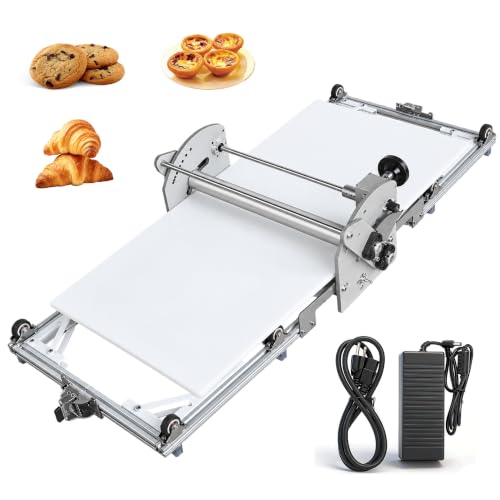
- Electric rolling supports faster, consistent output
- Adjusts from 2–30mm for varied doughs
- Detachable stainless steel design saves space
Best For: Home and small commercial kitchens needing efficient daily rolling
Best Fine-Control Manual Model
Stainless Steel Folding Pastry Roller

- Fine adjustment increments down to 0.5mm
- Folds compactly for easier storage
- Wide platform and versatile manual operation
Best For: Artisan bakers needing precise thickness control across varied doughs
Precision Folding Pick
Manual Stainless Steel Dough Sheeter

- 0–25 mm range with approximately 55 settings
- Food-grade stainless steel dough-contact surfaces
- Folds flat and operates without electricity
Best For: Home bakers and small food businesses needing fine manual control
Stable Surface Pick
Foldable Dough Roller with Suction Cups

- Large 40.5-by-22.8-inch work surface
- 10 settings across a 0–25 mm range
- Suction cups, non-stick rollers, and carrying handle
Best For: Portable home setups needing extra countertop stability
Fine-Adjustment Workhorse
Folding Commercial-Style Dough Sheeter

- 56 settings with 0.5 mm adjustment increments
- Folds to approximately 18.5 by 11.8 inches
- Alloy frame with stainless steel dough-contact parts
Best For: Small bakeries and serious home bakers wanting granular control
Best Space-Saving Manual Sheeter – Foldable Stainless Steel Dough Roller
For bakers comparing dough sheeters for artisan baking, this foldable stainless steel model offers a practical balance of capacity, adjustability, and storage convenience. Its hand crank and 2–30 mm thickness range suit everything from pastry dough to pizza crusts.
Best For: Home bakers who need a versatile sheeter that folds away between baking sessions.
Pros:
- Folds into a compact, suitcase-like form for easier storage.
- Food-grade 304 stainless steel is hygienic and easy to rinse clean.
- Adjustable 2–30 mm thickness supports a broad range of pastries and doughs.
- Manual crank rolls dough evenly without relying on electricity.
Cons:
- At 22.4 pounds, it may be substantial to move regularly.
- Manual operation requires some physical effort for larger batches.
This is a strong fit for kitchens where counter space is limited but consistent thickness matters. The foldable frame adds flexibility, while the wide range of settings makes it useful beyond a single pastry style.
Best Adjustable Commercial-Style Option – Model400 Folding Dough Sheeter
Among dough sheeters for artisan baking, the Model400 stands out for its folding design, broad working size options, and fine thickness control. It is designed for manual handling of pastry dough, fondant, pizza dough, cookies, and related baking projects.
Best For: Home bakers, small bakeries, and caterers seeking a foldable sheeter with professional-oriented capacity.
Pros:
- Offers adjustable settings across a stated 0–25 mm range.
- Folds down for storage in cabinets, closets, or RVs.
- Available in home and larger 40 × 90 cm formats.
- Non-slip base and ergonomic handles support manual operation.
Cons:
- The larger format may need considerable workspace when opened.
- Manual cranking is less convenient than an electric machine for high-volume work.
- Product specifications describe multiple sizes, so buyers should verify the selected format.
The Model400 is appealing when storage and versatility are priorities. Its folding frame and multiple size options make it adaptable, though the exact configuration should be confirmed before purchase.
Best Compact Countertop Pick – 12-Inch Folding Dough Sheeter
This 12-inch model is a practical choice for bakers shopping for dough sheeters for artisan baking without moving to a larger commercial setup. It combines a tabletop footprint with adjustable thickness, a hand crank, and a stable dough board for everyday pastry work.
Best For: Home kitchens, cafés, pizzerias, and small bakeries needing a compact manual sheeter.
Pros:
- Wide 12-inch dough board is designed for even rolling in one pass.
- Adjustable knob provides flexible thickness control.
- Non-slip feet and a sturdy base help minimize vibration.
- Detachable parts and low-friction rollers simplify operation and cleaning.
Cons:
- The 12-inch working width may be limiting for larger dough sheets.
- At 27 pounds, it is not especially lightweight for a countertop tool.
With its stable base and compact format, this sheeter suits regular small-batch baking. It is particularly useful for consistent pizza, laminated dough, pastry, and fondant preparation where a full-size machine would be excessive.
Best Manual Alternative – Adjustable Stainless Steel Rolling Pin Set
If you are considering dough sheeters for artisan baking but prefer a simpler tool, this stainless steel rolling pin set provides guided thickness control without a machine. Detachable rings help produce consistent 2, 4, 6, or 10 mm sheets, while the included silicone mat provides a defined work surface.
Best For: Casual home bakers, beginners, and anyone with limited storage who works in smaller batches.
Pros:
- Food-grade 304 stainless steel is non-rusting and easy to clean.
- Four ring sizes support repeatable thickness from 2–10 mm.
- Includes a 23.6 × 15.7-inch baking mat.
- Rings can be removed to use the pin as a standard rolling pin.
Cons:
- Requires more manual effort than a crank-operated sheeter.
- It may be less suitable for large batches or very wide dough sheets.
- Its stated thickness options do not cover the wider 25–30 mm ranges of some sheeters.
This set is a cost-conscious, low-storage alternative for smaller artisan baking projects. It cannot match a machine’s throughput, but its interchangeable guides make consistent results more accessible for beginners.
Best Large Manual Option – Foldable Dough Sheeter for Artisan Baking
For bakers comparing dough sheeters for artisan baking, this manual model offers a wide 40.6-inch working platform, adjustable thickness control, and electricity-free operation. Its foldable design also makes it practical when workspace and storage are limited.
Best For: Home bakers, food trucks, pizza shops, and small bakeries handling larger dough batches.
Pros:
- Offers a 0–25mm range with 56 adjustable settings for dough thickness control.
- Large 40.6 × 22.8-inch workspace accommodates sizable batches.
- Foldable, stainless steel construction stores more easily than a fixed machine.
- Manual handle operation works without electricity and suits multiple dough types.
Cons:
- Manual operation requires more hands-on effort than an electric sheeter.
- The large expanded footprint may still need substantial counter space during use.
This is a flexible choice if you want generous working room and fine thickness adjustment without relying on power. It is especially useful for mixed pastry, pizza, pasta, and fondant preparation.
Best Electric Pick – Compact Adjustable Electric Dough Sheeter
This electric option is suited to bakers who want faster, more consistent rolling from their dough sheeters for artisan baking. Its 2–30mm adjustment range, stainless steel build, and detachable design support both everyday home baking and small commercial workloads.
Best For: Home bakers, cafés, bakeries, and small food businesses prioritizing speed and repeatable thickness.
Pros:
- Electric operation helps produce fast, even dough sheets with less manual effort.
- Adjustable 2–30mm thickness accommodates croissants, pizza, pastry, cookies, and pasta.
- Detachable construction helps with assembly and storage.
- Stainless steel body and food-grade rollers are designed for durability and rust resistance.
Cons:
- Requires access to electricity, unlike the manual alternatives.
- Its 22.7-inch format may provide less working space than larger sheeters.
Choose this model when production speed and consistent results matter more than maximum workspace. The detachable structure is a useful advantage for kitchens that need to clear or rearrange counter space.
Best Fine-Control Manual Model – Stainless Steel Folding Pastry Roller
For artisan bakers who value detailed thickness control, this manual sheeter combines dual adjustment with increments as fine as 0.5mm. It folds down compactly while offering a broad working surface for pastry, pizza, pasta, and other doughs.
Best For: Bakers who need fine manual control and a compact storage footprint for varied pastry work.
Pros:
- 0–25mm adjustment with increments as fine as 0.5mm supports precise results.
- Expands to 40.6 × 22.8 × 15.7 inches and folds to 18.5 × 11.8 × 4.7 inches.
- Food-grade stainless steel contact surfaces and reinforced alloy frame suit frequent use.
- Manual 360-degree handle operation requires no electricity.
Cons:
- Manual rolling can be more labor-intensive than electric operation.
- Its expanded dimensions require considerable space while in use.
This model stands out for its unusually fine adjustment increments and compact folded dimensions. It is a strong fit for artisan baking setups that switch between delicate pastries, pizza dough, cookies, and pasta sheets.
Precision Folding Pick – Manual Stainless Steel Dough Sheeter
For bakers comparing dough sheeters for artisan baking, this manual stainless steel model stands out for its broad 0–25 mm thickness range and approximately 55 settings. It handles everything from pasta and pastry to pizza dough, while its folding design helps conserve kitchen space.
Best For: Home bakers and small food businesses that need fine thickness control without electricity.
Pros:
- Offers approximately 55 thickness settings across a 0–25 mm range.
- Food-grade stainless steel contacts the dough and is designed for straightforward wiping.
- Folds flat for more compact storage.
- Manual, ergonomic handle operation requires no electricity.
Cons:
- Manual operation requires repeated hand turning.
- The supplied notes do not specify the folded dimensions.
Choose this model if precise adjustment and easy storage matter more than powered operation. Its versatile thickness range suits varied artisan baking tasks, from laminated pastries to pasta and pizza.
Stable Surface Pick – Foldable Dough Roller with Suction Cups
This option is a practical contender among dough sheeters for artisan baking, combining a 15.5-inch rolling surface with 10 adjustable thickness levels. Its non-stick rollers, suction-cup base, and carrying handle are useful for bakers who move or store their equipment regularly.
Best For: Home and small-kitchen bakers who want a portable manual sheeter with added countertop stability.
Pros:
- Provides a large 40.5-by-22.8-inch work surface.
- Offers 10 thickness levels within a 0–25 mm range.
- Four heavy-duty suction cups help stabilize it on smooth counters.
- Foldable construction and a built-in handle support storage and transport.
Cons:
- Ten settings provide less adjustment granularity than models with dozens of fine-tuning positions.
- Operation is manual rather than powered.
This is a balanced choice when steadiness and portability are priorities. The large work area suits pastry and pizza projects, while the folding frame helps it fit into a smaller baking setup.
Fine-Adjustment Workhorse – Folding Commercial-Style Dough Sheeter
For artisan bakers seeking repeatable results, this folding manual sheeter offers 56 thickness settings with 0.5 mm adjustment increments across a 0–25 mm range. It combines a high-strength alloy frame, food-grade stainless steel dough-contact parts, and a compact folded footprint.
Best For: Home kitchens, small bakeries, pastry shops, and other spaces needing detailed thickness control.
Pros:
- Provides 56 fine-tuning settings with 0.5 mm precision.
- Folds from a 40.5-by-22.8-inch working size to approximately 18.5-by-11.8 inches for storage.
- High-strength alloy framing and food-grade stainless steel dough-contact parts support regular use.
- Ergonomic 360-degree handle and gear system are designed for smoother manual rolling.
Cons:
- At 25 pounds, it may be less convenient to move frequently.
- Manual rolling still requires physical effort for extended sessions.
This model is the strongest fit for bakers who value granular adjustment and a more substantial build. Its compact folded dimensions make the 25-pound frame easier to accommodate in a limited workspace.
How We Picked the Best Dough Sheeters for Artisan Baking
We focused on the features that matter most when rolling pastry and other dough repeatedly: usable roller width, thickness adjustment, construction, operating style, storage, and versatility. The selection includes compact tools for occasional home baking alongside larger manual and electric machines suited to frequent batches.
Because product specifications and included accessories can vary, confirm the exact dimensions, power requirements, adjustment mechanism, and food-contact materials before ordering. A machine that looks similar to another may have a very different capacity or footprint.
Quick Comparison
- Compact manual options: Best for small kitchens, occasional pastry work, and controlled batch sizes.
- Foldable countertop sheeters: A practical middle ground for home bakers who need more width but limited storage space.
- Large manual machines: Better for frequent pizza, pastry, cookie, or fondant preparation without relying on electricity.
- Electric sheeters: The most convenient choice for higher-volume work, especially when reducing repetitive hand cranking matters.
- Rolling pin and mat sets: Useful when portability, low cost, and hands-on control are more important than speed.
Key Buying Factors for Dough Sheeters for Artisan Baking
Roller Width and Available Space
Wider rollers handle larger pastry sheets and pizza dough more efficiently, but they require a deeper, wider work surface and more storage room. Measure your counter before choosing a commercial-size model, including space for handles and dough movement.
Thickness Range and Precision
Look for a clearly marked adjustment system and a range suited to your recipes. Laminated pastry may need very thin, repeatable settings, while pizza, cookies, and fondant benefit from different thicknesses. A broad range is useful only if adjustments remain stable during operation.
Manual Versus Electric Operation
Manual sheeters are generally simpler, quieter, and easier to place wherever needed, but they require more effort. Electric models can improve throughput and consistency for larger batches. Check motor details, voltage, controls, and whether the machine can run continuously for your intended workload.
Construction and Cleanup
Stainless steel surfaces are attractive for durability and routine sanitation. Favor smooth, accessible areas and removable or easy-to-clean components. Also check the machine’s weight and stability; a lightweight unit may be easier to store but less steady under firm dough.
Who Should Buy Which Dough Sheeters for Artisan Baking?
Choose a compact manual tool if you bake small batches, have limited counter space, or want maximum control. Choose a foldable countertop model if you need a wider working area but must store the sheeter between uses. Choose a full-size manual machine for regular pastry, pizza, or cookie production without adding a motor. Choose an electric model when speed, reduced physical effort, and repeatable output justify the larger investment. For occasional baking or travel, a rolling pin and thickness-guide set may be the most practical option.