Rolling large quantities of dough by hand is slow, tiring, and difficult to keep consistent. The right dough sheeter can streamline production while delivering more uniform thickness for pizza, pastry, cookies, puff pastry, fondant, and laminated doughs.
This roundup compares 10 electric and manual models, focusing on working width, thickness control, construction, footprint, and practical features that matter when you are processing batch after batch.
Best 10 Dough Sheeters for Large Batches Picks for 2026
Best Electric Value
Adjustable 51-Inch Dough Sheeter

- Electric motor reduces manual rolling effort
- 2–30mm range with 10 thickness settings
- Foldable frame for easier storage
Best For: Home, mobile, and commercial baking setups needing electric operation
Best Manual Option
Stainless Steel Hand-Crank Dough Sheeter

- 304 stainless steel construction
- 2–30mm multi-gear adjustment
- Foldable for space-saving storage
Best For: Home bakers and small kitchens preferring manual control
Best Commercial-Style Design
Electric Sheeter with Integrated Boards
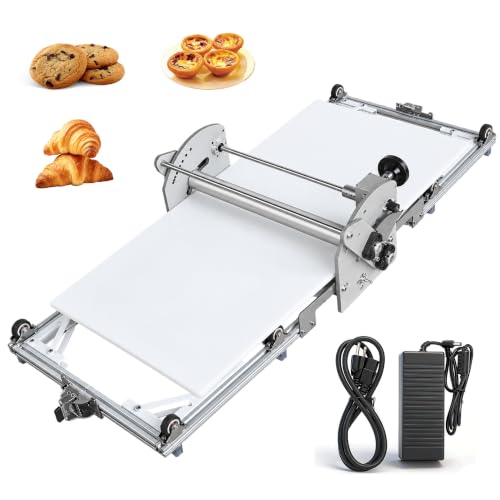
- 48-inch electric sheeter with integrated boards
- 2–30mm thickness adjustment
- Non-stick food-grade PE rolling surface
Best For: Cake and dessert shops needing a broad, cleanable work area
Best for Small Bakeries
WantJoin 40-Inch Electric Sheeter

- 40-inch electric reciprocating rolling board
- 2–30mm thickness adjustment
- Includes croissant cutter and one-year warranty
Best For: Home and small commercial kitchens making recurring pastry batches
Flexible Batch Prep

- 40.6-by-22.8-inch foldable workspace
- 0-25 mm range with 56 settings
- Food-grade stainless steel contact surface
Best For: Small bakeries and food businesses needing manual, space-conscious batch prep
Commercial Throughput
48-Inch Electric Dough Sheeter

- Electric operation for hands-free rolling
- 2-30 mm thickness adjustment
- Food-grade PE board with stainless steel body
Best For: Commercial bakeries and shops preparing dough frequently
Compact Precision
Folding Countertop Dough Sheeter

- 40.6-by-22.8-inch folding workspace
- Approximately 55 settings from 0-25 mm
- Stainless steel dough-contact components
Best For: Space-conscious kitchens and small businesses using a manual sheeter
Best Electric Option
22.7" Commercial Electric Dough Sheeter
- Electric rolling reduces manual effort
- 2–30 mm thickness adjustment
- Foldable 304 stainless steel design
Best For: Commercial kitchens prioritizing efficient, consistent rolling
Best Manual Tabletop Pick
40.5" Folding Stainless Steel Dough Sheeter

- Manual operation needs no electricity
- Adjusts from 2–25 mm
- Foldable stainless steel tabletop design
Best For: Hands-on bakers needing versatile manual rolling
Best Large-Surface Value
Folding Manual Dough Sheeter with Board

- 40.9 × 15.5-inch rolling surface
- Folds compactly for storage
- Adjustable thickness up to 27 mm
Best For: Home bakers and small bakeries handling larger dough portions
Best Electric Value – Adjustable 51-Inch Dough Sheeter
For bakers comparing dough sheeters for large batches, this electric model combines a wide 51-inch desktop footprint with hands-free operation and a broad 2–30mm thickness range. Its foldable frame also helps when storage space is limited.
Best For: Home bakers, mobile caterers, and commercial kitchens that want electric rolling with flexible thickness control.
Pros:
- Electric high-torque copper motor reduces manual rolling effort.
- Ten adjustments cover dough thicknesses from 2mm to 30mm.
- Foldable frame supports easier storage between baking sessions.
- Suitable for croissants, egg tarts, danishes, and puff pastries.
Cons:
- At 42.4 pounds, it is not especially lightweight to move.
- The 51-inch by 22-inch structure requires substantial counter or storage space when open.
This is a practical choice when consistent electric rolling matters more than portability. The foldable design adds versatility, but buyers should measure their workspace before ordering.
Best Manual Option – Stainless Steel Hand-Crank Dough Sheeter
This manual dough sheeter is a straightforward option for preparing larger batches without relying on an electric motor. Its 304 stainless steel construction, 2–30mm gear adjustment, and foldable design make it useful for organized home or small-kitchen baking.
Best For: Home bakers and small kitchens that prefer hand-crank control, easy cleaning, and compact storage.
Pros:
- Food-grade 304 stainless steel is hygienic and easy to clean.
- Hand-crank operation rolls dough evenly with less effort than traditional rolling.
- Adjustable gears support thicknesses from 2mm to 30mm.
- Folds into a more compact size for storage.
Cons:
- Manual operation still requires user effort for repeated large-batch work.
- Its 40.5-inch by 22.8-inch footprint may be large for very tight counters.
Choose this model if you want the structure and consistency of a sheeter while avoiding electrical operation. It is lighter than the listed electric alternatives at 22.4 pounds, but high-volume production will still involve hand-cranking.
Best Commercial-Style Design – Electric Sheeter with Integrated Boards
For dough sheeters for large batches, this electric model stands out with integrated rolling boards, a 48-inch overall length, and a 39.3-inch by 17.7-inch working board. The 2–30mm adjustment range supports laminated doughs, pizza, cookies, pasta, and fondant.
Best For: Cake shops, dessert shops, and baking operations that need a broad working surface and easy-to-clean rolling area.
Pros:
- Electric operation reduces the tedious work of traditional rolling.
- Food-grade PE, non-stick rolling boards are designed for hygienic, easier cleanup.
- 2–30mm adjustment accommodates many dough and pastry applications.
- Detachable construction supports storage and assembly.
Cons:
- The integrated board still needs significant counter space when opened.
- The supplied notes do not specify motor power or operating noise.
This model is appealing for shops that value an integrated, cleanable work surface and broad application range. Confirm the available counter dimensions and electrical requirements before committing to a production setup.
Best for Small Bakeries – WantJoin 40-Inch Electric Sheeter
This WantJoin model is designed for frequent home or small-commercial use, with a 40-inch rolling width, reciprocating electric operation, and 2–30mm thickness control. Its foldable support frame and included croissant cutter add convenience for batch pastry preparation.
Best For: Home bakers and small bakeries handling wider dough pieces while needing fold-away storage and included cutting support.
Pros:
- Left-right electric reciprocating motion reduces manual effort.
- 40-inch food-grade PP board accommodates dough up to 450mm wide.
- 2–30mm adjustment supports gradual thinning and consistent layers.
- Includes a croissant cutter and one-year warranty with technical assistance.
Cons:
- The 51.2-inch by 22.4-inch overall dimensions require considerable setup space.
- At 42.1 pounds, it may be cumbersome to reposition frequently.
With its large board, foldable frame, and included cutter, this is a well-rounded option for smaller operations preparing repeated pastry batches. The one-year warranty and support may also appeal to buyers who want added assistance.
Flexible Batch Prep – Foldable Manual Dough Sheeter
For bakers comparing dough sheeters for large batches, this manual model stands out for its expanded 40.6-by-22.8-inch working platform and foldable design. Its 0-25 mm range and 56 adjustment settings support consistent sheets for pizza, pastry, cookies, pasta, and other doughs without requiring electricity.
Best For: Home bakers, food trucks, pizza shops, and small bakeries that need a large working surface with compact storage.
Pros:
- Large foldable platform accommodates substantial dough portions.
- Offers 0-25 mm thickness control with 56 adjustment settings.
- Food-grade stainless steel contact surface and reinforced alloy frame.
- Manual operation works without an electrical connection.
Cons:
- Manual rolling requires more hands-on effort than an electric sheeter.
- Its 40.6-inch footprint may still require significant counter space when open.
This is a practical choice when batch capacity and storage flexibility matter more than automated output. The foldable platform helps offset its large operating size, while the detailed thickness adjustment suits varied pastry work.
Commercial Throughput – 48-Inch Electric Dough Sheeter
Among dough sheeters for large batches, this 48-inch electric model is designed for commercial workflows where reduced manual effort and repeatable results are priorities. It combines a 2-30 mm adjustment range with a food-grade PE rolling board and stainless steel construction.
Best For: Professional bakeries, pastry shops, cafes, and dessert businesses handling frequent dough preparation.
Pros:
- Electric operation reduces the effort of repeated rolling.
- 2-30 mm thickness range suits laminated doughs, pizza, pasta, cookies, and fondant.
- Large 48-inch overall dimensions support commercial preparation.
- Integrated non-stick PE board is designed for easier release and cleanup.
Cons:
- Requires electrical operation rather than offering manual portability.
- The 48-inch format needs substantial kitchen or countertop space when assembled.
This model is the strongest fit for businesses prioritizing speed and lower operator fatigue. Its detachable structure helps with storage, but buyers should confirm that their workspace can accommodate the large operating dimensions.
Compact Precision – Folding Countertop Dough Sheeter
This folding countertop model gives bakers working with dough sheeters for large batches a broad 40.6-by-22.8-inch workspace without committing to permanent equipment. Manual operation, approximately 55 thickness settings, and a 0-25 mm range cover applications from croissants and pastry to pizza, pasta, and dumpling wrappers.
Best For: Home kitchens and small food businesses that need versatile manual sheeting with straightforward storage and cleanup.
Pros:
- Folds flat to help optimize limited kitchen space.
- Provides approximately 55 settings across a 0-25 mm thickness range.
- Food-contact components use stainless steel, with a high-strength alloy frame.
- Ergonomic handle and wipe-clean components support routine manual use.
Cons:
- Manual operation may be less efficient for very high-volume production.
- Its large open footprint can be demanding on smaller counters.
This sheeter balances batch-friendly working dimensions with a storage-conscious folding design. It makes sense for users who want broad dough versatility and precise adjustment but do not need an electric commercial machine.
Best Electric Option – 22.7" Commercial Electric Dough Sheeter
For bakeries, pizza shops, and pastry operations comparing dough sheeters for large batches, this electric model emphasizes consistent rolling with less manual effort. Its 2–30 mm thickness range supports pizza dough, croissants, puff pastry, pasta, and empanadas.
Best For: Commercial kitchens that want electric operation, adjustable thickness, and a foldable countertop design.
Pros:
- Electric rolling helps reduce preparation time and physical strain.
- Adjustable 2–30 mm thickness supports varied dough styles.
- 304 stainless steel construction is food-safe, rust-resistant, and easy to clean.
- Foldable design helps conserve countertop and storage space.
Cons:
- At 52 pounds, it is relatively heavy to move and store.
- Electric operation requires access to a suitable power source.
This is the strongest fit when throughput and reduced hands-on rolling matter most. Its commercial-oriented construction and broad thickness adjustment make it versatile, while the foldable format helps offset its substantial weight.
Best Manual Tabletop Pick – 40.5" Folding Stainless Steel Dough Sheeter
This manual model is a practical choice among dough sheeters for large batches when you want a wide working format without electrical operation. Its stainless steel frame, smooth roller system, and adjustable 2–25 mm range support pizza, pastry, bread, and cookie dough.
Best For: Bakers who prefer manual control and need a foldable sheeter for recurring tabletop production.
Pros:
- Manual operation avoids dependence on electricity.
- Precision knob adjusts thickness from 2 to 25 mm.
- Stable tabletop design and polished rollers support smooth processing.
- Foldable construction simplifies storage.
Cons:
- Manual cranking requires more physical effort than an electric model.
- The supplied details list both 25 mm and 30 mm maximum thickness specifications, so buyers should verify the listing.
Choose this sheeter for straightforward, electricity-free operation with useful thickness control. It offers a balance of stainless steel durability, tabletop stability, and compact storage, though large-volume users must be comfortable with manual rolling.
Best Large-Surface Value – Folding Manual Dough Sheeter with Board
For buyers seeking dough sheeters for large batches, this manual unit provides a 40.9 × 15.5-inch rolling surface and a dedicated sheeter board for handling dough. It folds to a compact 18.5 × 9.5 × 4.2 inches and offers thickness adjustment up to 27 mm.
Best For: Home bakers and small-scale bakeries that need a broad rolling surface with compact storage.
Pros:
- Large rolling surface accommodates substantial dough portions.
- Folds quickly for easier storage and can be assembled or disassembled in seconds.
- Manual operation works without electricity.
- Stainless steel construction and a smooth PE rolling surface simplify cleaning.
Cons:
- Manual rolling requires hand-cranking or pushing.
- The unfolded footprint is large and needs adequate workspace.
- Its stated maximum thickness is 27 mm, which may be less than some thicker-dough requirements.
This model stands out for combining a generous work area with compact folded storage. It is especially practical for smaller operations that process larger dough portions but do not need an electric drive.
How We Picked the Best Dough Sheeters for Large Batches
We evaluated these machines by the factors that most affect commercial-style dough preparation: usable roller width, thickness range, adjustment precision, drive type, construction, work surface, storage, and likely maintenance needs. Electric models can reduce repetitive labor and are generally the better fit for frequent production, while manual sheeters may offer a lower-cost solution for smaller operations or occasional batch work.
Because listed specifications can vary by seller, confirm dimensions, motor details, voltage, included boards, and maximum dough capacity before ordering. Also check whether the machine requires a dedicated counter, assembly, or additional accessories.
Quick Comparison
| Best For | Recommended Type | What to Prioritize |
|---|---|---|
| High-volume bakery production | Wide electric sheeter | Motor power, continuous operation, stainless-steel construction |
| Pizza and pastry shops | Electric or folding manual model | Working width, adjustment range, easy cleaning |
| Small commercial kitchens | Compact electric sheeter | Footprint, board size, electrical requirements |
| Budget-conscious users | Manual sheeter | Frame stability, roller adjustment, storage |
Key Buying Factors for Dough Sheeters for Large Batches
Roller Width and Throughput
A wider roller can process larger pieces of dough and reduce the number of passes required. Models around 40 to 51 inches are suited to substantial workloads, but they also need more counter or floor space. Match the width to your typical dough portions rather than choosing the largest machine automatically.
Thickness Adjustment
Look for a clearly marked, repeatable adjustment system. Ranges such as 2–30 mm cover many pizza, pastry, cookie, and fondant applications. Fine control is especially important for laminated dough, where inconsistent thickness can affect layering and baking.
Electric Versus Manual Operation
Electric machines are more efficient for repeated batches and can reduce operator fatigue. Manual units are simpler, quieter, and often easier to store, but they require more physical effort and may be slower at higher volumes.
Construction and Cleaning
Food-grade stainless steel is a practical choice for durability and sanitation. Examine whether rollers, boards, guards, and scrapers are accessible for cleaning. Non-stick boards can help with release, but they still require proper flour management and careful upkeep.
Space, Safety, and Power
Measure the available counter or floor area, including clearance for feeding and receiving dough. Verify voltage and plug requirements for electric models. Stable feet, guarded moving parts, emergency controls, and a manageable working height are important in busy kitchens.
Who Should Buy Which Dough Sheeters for Large Batches?
Choose a wide electric model if you run a bakery, restaurant, or catering operation where speed and repeatability matter most. A compact electric sheeter is better for kitchens with regular production but limited space. Pick a folding manual model if you need flexibility, lower upfront cost, or occasional batch processing. For pizza-focused work, prioritize a durable frame and a width that matches your dough-ball size; for pastry and fondant, prioritize precise thickness control and a clean, smooth work surface.