Making fresh pasta for a crowd requires more than a capable roller. The right machine must handle repeated mixing, sheeting, cutting, or extrusion without creating bottlenecks.
This roundup compares 10 pasta machines for large batches, including automatic home appliances, electric rollers, manual Italian machines, and commercial extruders. Use the buying guide below to match capacity, output style, and cleanup demands to your kitchen.
Best 10 Pasta Machines for Large Batches Picks for 2026
Heavy-Duty Commercial Pick
750W Stainless Steel Pasta Maker

- Up to 45–66 lb of noodles per hour
- Kneads, presses, and cuts dough
- Multiple cutters and 0.1–20mm thickness range
Best For: Restaurants and high-volume home kitchens
Best Large-Capacity Home Option
Philips 7000 Series Pasta Maker

- Prepares up to eight portions
- Automatic pasta in under 10 minutes
- Eight discs and dishwasher-safe parts
Best For: Families and entertaining at home
Best Traditional Electric Set
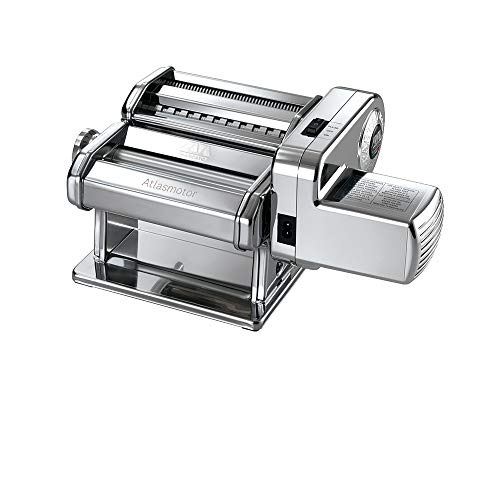
- Electric motor plus hand-crank option
- Rolls sheets up to six inches wide
- Ten thickness positions and Italian construction
Best For: Hands-on home pasta makers
Best Value Commercial Alternative

- 2-in-1 dough pressing and cutting
- 0.12–18mm adjustable thickness
- 750W motor with steel gears
Best For: Restaurants and serious batch cooking at home
Italian Craftsmanship

- Made in Italy with chromed-steel construction
- Makes sheets, fettuccine, and tagliolini
- Compatible with a motor and expansion accessories
Best For: Durable, upgradeable manual pasta making
Commercial Batch Power

- 550W motor for repeated dough processing
- Includes 2 mm and 6 mm noodle cutters
- Adjusts from 0.1 mm to 5 mm sheet thickness
Best For: High-volume kitchens and food preparation
Classic Manual Control

- Made in Italy with plated-steel components
- Makes lasagna, fettuccine, and tagliolini
- Provides 10 thickness settings in a compact body
Best For: Space-conscious home cooks who prefer manual control
Commercial Capacity Pick

- Produces a stated 15–20 kg/h
- Includes three interchangeable dies
- Stainless steel with casters
Best For: Small to medium commercial kitchens
Durable Sheet-and-Cutter Choice

- Eight thickness settings from 0.4–2 mm
- Includes sheet, fettuccine, and spaghetti functions
- Reverse and two speeds aid dough control
Best For: Home cooks making paced repeat batches
Family Batch Convenience Pick

- Handles up to 500g of flour
- Makes noodles for about four people in 14 minutes
- Includes eight shape discs and automatic modes
Best For: Families and beginner home cooks
Heavy-Duty Commercial Pick – 750W Stainless Steel Pasta Maker
For pasta machines for large batches, this commercial-style YIMOHOME model stands out for its 750W motor, stainless steel construction, and stated output of up to 45–66 pounds of fresh noodles per hour. It also handles dough rolling and cutting, making it suitable for more than standard pasta.
Best For: Restaurants, large households, and users who need high-volume noodle, pasta, or dough-sheet production.
Pros:
- 750W all-copper motor with cast-iron gears and a reinforced steel shell.
- Combines kneading, pressing, and cutting in one machine.
- Adjustable dough thickness from 0.1 to 20mm, with multiple cutter options.
- Can make flat noodles, ramen, dumpling wrappers, wonton skins, and other dough products.
Cons:
- At about 46 pounds, it is substantially heavier than typical home pasta makers.
- The commercial footprint may be excessive for kitchens with limited counter space.
- Its many cutter and dough settings may require an adjustment period.
Choose this model when throughput and versatility matter more than portability. Its heavy-duty construction and broad thickness range make it one of the more production-oriented options in this group.
Best Large-Capacity Home Option – Philips 7000 Series Pasta Maker
The Philips 7000 Series is a practical choice for pasta machines for large batches when you want automated preparation without commercial-scale equipment. Its large-capacity design makes up to eight portions in one cycle, while the included discs support different pasta shapes.
Best For: Families and hosts who want fresh pasta prepared automatically in under 10 minutes.
Pros:
- Makes up to eight portions in one batch.
- Automatic operation with Philips ProExtrude and Perfect Mixing technologies.
- Includes eight shaping discs for pasta variety.
- Non-stick, dishwasher-safe parts simplify cleanup.
Cons:
- Its 150W motor is less powerful than the 750W commercial models in this roundup.
- It is designed around automated extrusion rather than wide dough-sheet rolling.
- Recipe guidance requires use of the separate HomeID app.
This is the most approachable option for busy households that value speed, portion capacity, and easy cleanup. It offers batch-friendly convenience without the bulk of a restaurant-oriented machine.
Best Traditional Electric Set – Marcato Atlasmotor 150
The Marcato Atlasmotor 150 suits shoppers seeking pasta machines for large batches with a more hands-on workflow. Its electric Pastadrive motor speeds rolling, while the included hand crank and clamp preserve the option of manual operation when desired.
Best For: Home cooks who want electric assistance for repeated batches of pasta sheets up to six inches wide.
Pros:
- Includes the Atlas 150, Pastadrive motor, hand crank, clamp, and manual.
- Produces sheets up to 150mm, or six inches, wide.
- Ten thickness positions provide control over sheet adjustment.
- Made and assembled in Italy, with compatibility for 11 additional Marcato accessories.
Cons:
- It is a relatively compact 150mm roller, so it is not intended for very wide sheets.
- Additional pasta-shape accessories are sold separately.
- Cleaning requires allowing dough residue to dry before brushing it away.
This set is a good middle ground for cooks who want electric rolling assistance but still enjoy traditional pasta-making control. It is better suited to repeated home batches than to commercial-volume production.
Best Value Commercial Alternative – Newhai 750W Pasta Maker
For pasta machines for large batches, the Newhai 750W model offers a commercial-oriented combination of dough pressing and noodle cutting. Its adjustable 0.12–18mm thickness range and 2-in-1 design make it useful for both pasta and wrappers.
Best For: Restaurants or serious home users who need sturdy batch processing with adjustable dough thickness.
Pros:
- 750W motor and all-steel gears support heavy-duty operation.
- Presses dough and cuts pasta without removing the blades.
- Adjustable thickness from 0.12 to 18mm accommodates pasta sheets and wrappers.
- Non-slip pads and double-belt transmission support stable, lower-noise operation.
Cons:
- Automatic protective shutdown occurs after one to two hours of continuous operation.
- Users must wait 10–20 minutes for cooling before restarting after shutdown.
- At 22kg, it is heavy for a typical household countertop.
The Newhai is a capable choice when you need commercial-style strength but can work around scheduled cooling breaks. Its 2-in-1 workflow is especially useful for kitchens producing both noodles and dough wrappers.
Italian Craftsmanship – Imperia iPasta Classic Line
For shoppers comparing pasta machines for large batches, the Imperia iPasta Classic Line offers a sturdy manual design with optional motor compatibility. Its 150 mm roller produces sheets, fettuccine, and tagliolini, while six thickness settings support different recipes.
Best For: Cooks who want a durable manual machine that can later be upgraded for motorized operation.
Pros:
- Made entirely in Italy with solid chromed-steel construction.
- Produces sheets up to 150 mm wide, plus 6.5 mm fettuccine and 2 mm tagliolini.
- Supports six roller heights from 0.5 mm to 5 mm and can accept compatible accessories.
- Includes a crank, clamp support, storage pouch, cleaning brush, and non-slip base.
Cons:
- Manual operation may require more effort when preparing especially large batches.
- Motor and specialty accessories are compatible but not included.
This is a flexible choice for batch cooking when durability and expandability matter more than fully automatic operation. Its included accessories and broad pasta-making options make it a practical long-term setup.
Commercial Batch Power – XINGYUEXUAN Model 180
Among pasta machines for large batches, the XINGYUEXUAN Model 180 stands out for its 550W motor and semi-automatic workflow. It rolls dough and cuts either 2 mm or 6 mm noodles, making it suited to repeated preparation in busy kitchens.
Best For: Restaurants, food-prep businesses, and serious home cooks who need powered dough rolling and noodle cutting.
Pros:
- 550W motor supports repeated rolling and cutting tasks.
- Built-in 2 mm and 6 mm cutters provide two noodle widths.
- Adjustable roller gap from 0.1 mm to 5 mm handles thin wrappers through thicker dough sheets.
- Stainless-steel body is designed for commercial kitchen preparation.
Cons:
- At 42.3 pounds and 27 inches wide, it requires substantial counter or storage space.
- Its cutter setup offers two widths rather than the broader shape options of some specialty machines.
For high-volume preparation, the powered design should reduce the repetitive work involved in rolling and cutting. Its larger footprint is the main trade-off, but the commercial construction and dual cutter make it particularly batch-oriented.
Classic Manual Control – Marcato Atlas150
MARCATO Atlas150 Manual Pasta Maker Machine-LASAGNA, FETTUCCINE & TAGLIOLINI. Made in Italy
Check Price On AmazonThe Marcato Atlas150 is a compact manual option for shoppers seeking pasta machines for large batches without an electric motor. Made in Italy, it rolls dough into sheets and cuts lasagna, fettuccine, or tagliolini, with 10 thickness settings for recipe flexibility.
Best For: Home cooks who prefer hands-on pasta making and need a compact machine for recurring batches.
Pros:
- Made in Italy with nickel-plated and chrome-plated steel components.
- Supports lasagna, fettuccine, and tagliolini preparation.
- Offers 10 settings with a listed sheet range of 0.8 mm to 4.8 mm.
- Compact 8-by-8-by-7-inch design is easier to store than larger commercial models.
Cons:
- Manual operation can be slower and more tiring for very large batches.
- Only the pasta maker and crank handle are listed as included components.
This Atlas150 makes sense when storage space and manual control are priorities. Its three core pasta formats and numerous thickness settings provide useful versatility, though high-volume users may prefer a powered machine.
Commercial Capacity Pick – 15–20 kg/h Automatic Extruder
For restaurants, cafés, and food stalls comparing pasta machines for large batches, this automatic extruder stands out with a stated 15–20 kg/h output. Its 2.2 kW motor, 110V power, stainless-steel construction, and included dies are geared toward repeated commercial production rather than occasional home use.
Best For: Small to medium commercial kitchens needing high-volume extruded pasta and flexible placement.
Pros:
- High stated capacity of 15–20 kg per hour with one-person operation.
- Includes Fusilli, spaghetti, and penne dies; it also supports additional shapes with other dies.
- Stainless-steel body is durable, food-safe, and easy to clean.
- Handles and four anti-slip casters make the 220-pound machine easier to reposition.
Cons:
- At 220 pounds, it is substantially heavier than home-oriented machines.
- Its single listed setting and extrusion-focused design offer less sheet-and-cutter versatility.
- Additional pasta shapes may require separately sourced dies.
This is the strongest match for buyers who prioritize throughput and extruded shapes. Choose it when commercial capacity matters more than compact size or broad home-kitchen flexibility.
Durable Sheet-and-Cutter Choice – 700W Electric Pasta Maker
Among pasta machines for large batches, the GVODE is better suited to paced home production than nonstop commercial output. Its 700W motor, metal drive gears, stainless-steel roller, eight thickness settings, and reverse function provide practical control for making sheets, fettuccine, and spaghetti.
Best For: Home cooks and enthusiasts who want repeatable rolled pasta in manageable 15-minute cycles.
Pros:
- Eight thickness settings from 0.4 to 2 mm support varied sheet thicknesses.
- Includes a sheet roller, fettuccine cutter, spaghetti cutter, brush, and manual.
- Two speeds and reverse help control dough and clear bunching.
- Stainless-steel housing and metal drive gears are designed for durability and easier cleanup.
Cons:
- Recommended 15-minute runs require a 5-minute cooldown, limiting continuous batch work.
- It is semi-automatic and does not extrude shaped pasta.
- No stated commercial output capacity is provided.
The GVODE offers a useful balance of control and convenience for repeated household batches. Its cooldown requirement makes it less appropriate for production kitchens, but the roller-and-cutter setup is versatile for home pasta nights.
Family Batch Convenience Pick – 500g Automatic Noodle Maker
For shoppers seeking pasta machines for large batches at home, this VEVOR model offers a 500g flour capacity and automatic operation. It is designed to produce enough noodles for about four people in roughly 14 minutes, with eight discs, measuring cups, and guided modes for straightforward preparation.
Best For: Families and beginners who want automatic fresh noodles without manually rolling and cutting dough.
Pros:
- 500g flour capacity is sized for an approximately four-person batch.
- Eight discs provide multiple noodle and pasta shapes.
- Four automatic modes simplify mixing, kneading, and extrusion.
- Includes flour and liquid measuring cups, a spatula, brush, and dishwasher-safe parts.
Cons:
- It is intended for home use and has no stated commercial throughput rating.
- Incorrect flour-to-water ratios can prevent extrusion or cause sticking.
- The plastic-based housing materials are less oriented toward heavy commercial duty than stainless-steel equipment.
This machine is a convenient family-scale option rather than a true production unit. Its capacity, automation, and eight shapes make it appealing for regular home batches, provided users follow the supplied ratio guidance carefully.
How We Picked the Best Pasta Machines for Large Batches
We focused on the features that matter when producing multiple portions in one session: motor power, dough capacity, working speed, construction, available pasta shapes, and ease of cleaning. The selection includes both home and commercial designs because “large batch” can mean preparing dinner for a family, serving guests, or maintaining steady restaurant production.
We also considered workflow. A roller-and-cutter machine suits lasagna, fettuccine, and tagliolini, while an extruder is better for shaped short pasta. Automatic mixers can reduce hands-on work, but commercial units generally offer greater throughput and are heavier, louder, and more demanding to store.
Quick Comparison
- Best for high-volume commercial production: Choose a commercial extruder or heavy-duty electric machine rated for sustained output.
- Best for versatile home batches: Automatic models with integrated mixing and multiple dies can streamline preparation.
- Best for sheets and long noodles: Electric or manual roller machines provide control over thickness and cutting.
- Best for traditional durability: Italian steel machines are straightforward, repairable, and often easy to use in repeated sessions.
Key Buying Factors for Pasta Machines for Large Batches
Capacity and Throughput
Check the flour or dough capacity, not just the advertised wattage. A larger hopper or mixing bowl reduces reloads, while a stated kilograms-per-hour rating is more useful for commercial planning. Avoid exceeding the manufacturer’s recommended batch size; repeated overloading can strain the motor and produce inconsistent dough.
Machine Type and Pasta Format
Roller machines flatten dough for lasagna and cut noodles into set widths. Extruders press dough through dies to make shapes such as penne, macaroni, fusilli, or shells. If your menu includes both sheets and short pasta, verify whether the machine supports interchangeable accessories or whether a second appliance is necessary.
Construction and Motor Performance
Stainless steel and chrome-steel components are easier to sanitize and better suited to frequent use. A powerful motor helps with dense dough, but cooling, duty-cycle limits, and transmission quality matter as much as the wattage number. Commercial models may require more counter space and a dedicated electrical setup.
Cleaning and Operation
Look for removable cutters, accessible dough paths, and included brushes or tools. Never assume every component is dishwasher-safe. Automatic units save labor but have more parts to clean; manual machines are simpler but require more operator time.
Who Should Buy Which Pasta Machines for Large Batches?
Home cooks serving frequent large dinners should choose an automatic mixer-and-extruder or an electric roller with practical attachments. Serious enthusiasts who value control and classic construction may prefer an Italian manual machine, adding a motor if desired. Small restaurants and catering operations should prioritize commercial capacity, continuous-duty performance, sanitation, and available replacement dies over compactness. Before buying, measure your counter space, confirm voltage compatibility, and calculate whether the machine’s output matches your peak demand rather than your average batch.