Choosing the right dough mixer can help a small bakery produce more consistently while reducing hands-on kneading time. The models in this roundup range from compact 5.3-quart machines to larger 15-quart commercial mixers.
Use the comparison and buying advice below to match bowl capacity, motor power, fermentation features, controls, and cleaning requirements to your bakery’s workflow.
Best 10 Dough Kneading Machines for Small Bakeries Picks for 2026
Commercial Capacity Pick
VEVOR 8.5Qt Dual-Rotation Mixer
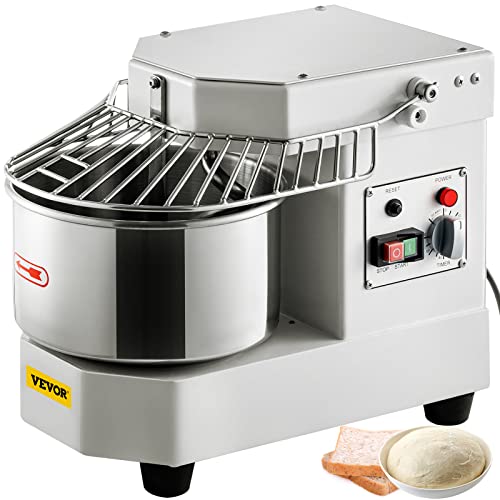
- Handles up to 3 kg of dough
- Dual rotation for even kneading
- 60-minute timer and safety shield
Best For: Small bakeries with regular bread or pizza production
Multi-Tasking Bakery Pick

- Includes hook, beater, and wire whip
- Three speeds for varied preparations
- 30-minute timer and detachable bowl
Best For: Small bakeries mixing dough and other foods
Large-Batch Fermentation Pick

- Mixes up to 2,800 g of flour
- Winter and Summer fermentation modes
- Four modes for dough and fillings
Best For: Larger batches with flexible fermentation needs
Best Controlled Fermentation

- Supports 300–1,400g dough batches
- 77–95°F constant-temperature fermentation
- Removable lid and hands-on knob controls
Best For: Small bakeries needing flexible batch sizes and proofing control
Best Fermentation Value
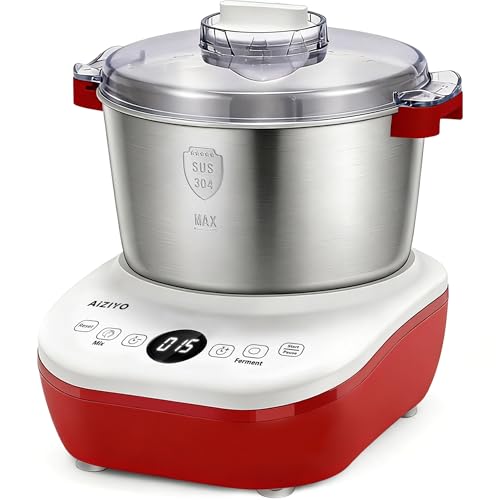
- Mixes and ferments in one appliance
- 77–100°F constant-temperature ferment mode
- 304 stainless steel bowl with touch controls
Best For: Small-batch baking with integrated proofing
Best Larger Red Model
- Larger 7.4-quart stainless steel bowl
- Mix-pause-mix hand-kneading simulation
- Built-in 77–100°F fermentation mode
Best For: Larger household or small-workspace batches
Commercial Capacity Pick – VEVOR 8.5Qt Dual-Rotation Mixer
For small bakeries that need a dedicated machine for dough kneading, this VEVOR model combines an 8-liter stainless steel bowl with dual rotation. Its 450W motor, timed operation, and safety shield make it suited to regular bread and pizza preparation.
Best For: Small bakeries, pizzerias, restaurants, and other operations making up to 3 kg of dough per batch.
Pros:
- Handles up to 3 kg of dough in its 8-liter bowl.
- Dual rotation helps produce more evenly mixed dough.
- Timer can be set for up to 60 minutes.
- Food-contact components are stainless steel and easy to clean.
Cons:
- Only one speed is listed.
- At 81.6 pounds, it is relatively heavy to reposition.
- Its 70 dB noise rating may matter in quieter workspaces.
This is a practical choice when dough is the main priority and you want commercial-style capacity, timed mixing, and a sturdy dual-rotation design rather than a lightweight countertop appliance.
Fermentation-Friendly Pick – Joydeem 5.3Qt Dough Maker
The Joydeem HMJ-A501 is a compact option for small bakeries seeking dough kneading machines with built-in fermentation support. Its intermittent kneading motion is designed to mimic hand kneading, while the base heating unit maintains a controlled fermentation range.
Best For: Small-scale bread, pizza, pasta, sourdough, roti, dumpling, and steamed-bun preparation where timed fermentation is useful.
Pros:
- 5.3-quart bowl accommodates up to 1,600 g of flour for mixing.
- Offers separate mixing, fermentation, and combined modes.
- Fermentation time is adjustable from 5 to 120 minutes.
- 304 stainless steel bowl and blade simplify cleaning.
Cons:
- Its maximum fermented-dough flour capacity is lower than its mixing capacity.
- The machine has one non-adjustable speed.
- Winter fermentation may require warm water because the heating range is limited.
Choose this model when fermentation control is as important as kneading. Its smaller capacity and 180W motor make it better suited to modest batches than high-volume bakery production.
Multi-Tasking Bakery Pick – VEVOR 15Qt Stand Mixer
This VEVOR stand mixer gives small bakeries more flexibility than a dough-only machine. It includes a dough hook, flat beater, and wire whip, plus three speeds for switching between heavy dough, fillings, batters, and whipped mixtures.
Best For: Bakeries, pizzerias, and commercial kitchens that need one mixer for dough, cakes, fillings, creams, and other preparations.
Pros:
- Includes three interchangeable attachments for varied recipes.
- Three speeds cover kneading, general mixing, and whipping.
- 30-minute timer reduces the need for constant monitoring.
- Detachable bowl and stirrers support easier cleaning.
Cons:
- The supplied notes list a maximum food load of 1.5 kg, so bowl size does not equal dough capacity.
- Speed changes require stopping the machine first.
- It does not include a fermentation function.
This is the strongest fit for a mixed menu rather than a dough-only workflow. Its attachments and speed range add versatility, while the stated load limit should be checked against your batch sizes.
Large-Batch Fermentation Pick – Joydeem 9.5Qt Dough Maker
For small bakeries that need larger dough batches and more process control, the Joydeem HMJ-A901 combines a 9.5-quart bowl with dedicated Mix, Ferment, Mix + Ferment, and Blend modes. It also provides seasonal fermentation settings for different working conditions.
Best For: Small bakeries making larger batches of bread, pizza, sourdough, roti, dumplings, steamed buns, or fillings.
Pros:
- Handles 900–2,800 g of flour for mixing.
- Supports up to 2,500 g of flour for fermented dough.
- Winter and Summer fermentation modes offer year-round flexibility.
- Blend mode continuously mixes fillings, while Mix mode uses intermittent kneading.
Cons:
- Its plastic and stainless steel construction may feel less industrial than an all-metal commercial mixer.
- The supplied notes describe replacement coverage for normal use at home, not commercial use.
- It is larger than the 5.3-quart Joydeem model and needs more counter space.
This model stands out when batch size and fermentation flexibility matter. Its four modes make it more versatile than a basic kneader, but commercial users should review the stated use terms before relying on it for business production.
Best Smart-Timed Pick – Joydeem 7.4Qt Dough Maker
For small bakeries seeking dough kneading machines for small bakeries, the Joydeem JD-HMJ7L combines timed kneading with fermentation in a compact vertical design. Its 250W motor and 6.24-liter stainless steel container suit bread, pizza, buns, and dumplings, while the preset programs can reduce hands-on labor.
Best For: Small bakeries and home-based operations that value automatic kneading and proofing in a space-conscious machine.
Pros:
- Preset programs can complete kneading in about 15 minutes and kneading plus proofing in about 45 minutes.
- Intermittent kneading motion simulates a mix-and-rest process for chewy dough.
- Stainless steel bowl and dough blade are dishwasher safe, and the removable cover simplifies cleaning.
- Suction-cup feet and a weighted body help limit movement and noise.
Cons:
- The 250W motor and single speed may be limiting for heavier commercial workloads.
- The listed noise level is 70 dB.
- The base is not dishwasher safe.
The Joydeem is a practical choice when timed automation, fermentation, and easy cleanup matter more than high-speed or highly adjustable mixing. Its capacity is suitable for smaller production runs, but bakeries with continuous heavy batches may need a more powerful mixer.
Best Controlled Fermentation – Empire Red 6.5QT Dough Maker
Among dough kneading machines for small bakeries, this 6.5QT model stands out for its stated 300-to-1,400-gram dough range and constant-temperature fermentation. The S-shaped stainless steel blade, removable lid, and knob control make it adaptable for bread, pizza, pasta, dumplings, and other pastries.
Best For: Small bakeries that need a broad batch range, hands-on ingredient adjustments, and controlled proofing.
Pros:
- Handles approximately 300 to 1,400 grams of dough without requiring multiple small batches.
- Constant-temperature fermentation operates from 77–95°F (25–38°C).
- Removable lid allows flour or water to be added during mixing.
- Knob controls are practical when working with flour-covered or wet hands.
Cons:
- The mixing bowl is not recommended for dishwasher cleaning.
- It has a single listed speed rather than adjustable speed settings.
- The supplied details do not specify the motor wattage.
This model offers useful flexibility for varied small-batch production, particularly where proofing consistency and mid-cycle adjustments are important. Its documented capacity range is helpful, though buyers should confirm that the batch size and cleaning routine fit their workflow.
Best Large-Batch Design – YC-010 7.4Qt Dough Mixer
This YC-010 is a strong contender among dough kneading machines for small bakeries that want a 7-liter working capacity and automatic fermentation. Its intermittent operation is designed to limit overheating during kneading, while the small top window lets staff add water or seasoning without stopping the machine.
Best For: Small bakeries preparing multiple servings of bread, pizza, or pastry dough in larger single batches.
Pros:
- 7.4-quart stainless steel capacity is suited to larger dough preparations.
- Constant-temperature fermentation supports more consistent proofing.
- Top window enables ingredient additions during mixing.
- Touch controls, digital display, time setting, and auto shutoff support convenient operation.
Cons:
- The 250W motor and single speed may not suit demanding continuous production.
- The supplied notes do not state the exact fermentation temperature range.
- Its wider feature set may be more than needed for very small batches.
The YC-010 emphasizes capacity and workflow convenience, making it appealing when a bakery wants fewer batch cycles and the ability to make adjustments mid-mix. Consider its 250W, single-speed configuration carefully if your operation handles dense dough throughout the day.
Best Fermentation Value – 5.3-Quart DoughChief Mixer
For small bakeries seeking dough kneading machines for small bakeries with built-in proofing, the AIZIYO DoughChief combines mixing and fermentation in a relatively compact 5.3-quart design. Its S-shaped blade, touch controls, and wide ingredient opening support repeatable bread, pizza, pasta, and mochi preparation.
Best For: Small-batch bakers who want an integrated mixing and proofing function without moving dough to a separate proofing box.
Pros:
- Mix, ferment, or run both functions together.
- Maintains a stated 77–100°F fermentation range.
- 304 stainless steel bowl and blade provide a durable food-contact setup.
- Wide opening allows flour or water adjustments while mixing.
Cons:
- Its 5.3-quart capacity is smaller than the two 7.4-quart options in this roundup.
- The 200-watt motor and single mixing speed may be limiting for heavier, frequent commercial batches.
- Listed noise level is 75 dB.
The built-in fermentation mode is the main differentiator for small operations that value a streamlined workflow. However, bakeries producing larger batches should consider the greater capacity of a 7.4-quart model.
Best Larger Red Model – 7.4-Quart DoughChief Mixer
The 7.4-quart AIZIYO DoughChief is a practical choice among dough kneading machines for small bakeries when a larger batch size matters. It retains the brand’s mix-and-ferment workflow, S-shaped blade, stainless steel bowl, and touch-panel controls while offering more capacity than the 5.3-quart model.
Best For: Home bakers, families, and small bakery workspaces that need larger bread or pizza dough batches with built-in proofing.
Pros:
- 7.4-quart capacity suits larger batches than the 5.3-quart version.
- Mix-pause-mix programming is designed to simulate hand kneading.
- Ferment mode maintains a stated 77–100°F range.
- Ingredients can be added through the wide top opening during operation.
Cons:
- Only one speed is listed.
- The 250-watt motor may not be ideal for very heavy commercial workloads.
- At 75 dB, it is not a silent machine.
This model offers a useful capacity increase without giving up the integrated proofing feature. Its single-speed design and home-baker positioning make it better suited to modest production than demanding continuous bakery use.
Best Easy-Clean Option – White 7.4-Quart DoughChief
For buyers comparing dough kneading machines for small bakeries, the white AIZIYO DoughChief stands out for its removable components and dishwasher-safe parts. Its 7.4-quart stainless steel bowl, three operating modes, and built-in fermentation function are designed to simplify bread, pizza, pasta, and sourdough-style preparation.
Best For: Small baking operations that prioritize straightforward cleanup, larger family-size batches, and flexible mix-or-proof programs.
Pros:
- Provides Mix, Ferment, and Mix & Ferment modes.
- 7.4-quart food-grade 304 stainless steel bowl supports family-size batches.
- Removable dishwasher-safe parts make cleanup easier.
- Removable S-shaped blade and mix-pause-mix program support hand-kneading-style development.
Cons:
- Only one speed is listed.
- The 250-watt motor is better aligned with everyday home or modest small-batch use than heavy production.
- Fermentation requires yeast or fermentation powder.
This is the most cleanup-focused option of the three, while matching the larger 7.4-quart capacity of the red model. The three-mode system adds workflow flexibility, but high-volume bakeries may still need a more powerful commercial mixer.
How We Picked the Best Dough Kneading Machines for Small Bakeries
We focused on the features that matter most in a small commercial baking environment: bowl capacity, stated motor power, dough-focused functions, fermentation controls, timing options, materials, and ease of operation. The selection includes compact dough makers for limited batches, mid-size machines for regular bread and pizza production, and larger commercial mixers for higher-volume work.
Because specifications and performance can vary by recipe, always confirm the manufacturer’s recommended flour or dough capacity before purchasing. A larger bowl does not automatically mean the machine can safely handle a heavy dough at full capacity.
Quick Comparison
| Best suited for | Typical capacity range | Features to prioritize |
|---|---|---|
| Small or test-batch bakeries | 5.3 to 6.5 qt | Compact footprint, simple controls, removable parts |
| Routine bread and pizza production | 7.4 to 9.5 qt | Fermentation, timer functions, stainless-steel bowl |
| Higher-volume small bakeries | 15 qt | Commercial construction, stronger capacity, batch consistency |
Key Buying Factors for Dough Kneading Machines for Small Bakeries
Capacity and Batch Size
Choose a bowl that fits your normal production rather than your largest occasional batch. Oversizing can waste counter space, while undersizing may force multiple cycles and increase labor. Check both bowl volume and the recommended dough load.
Motor Power and Dough Type
Thicker, lower-hydration doughs place more strain on a mixer than soft batters. Compare motor ratings carefully, but also look for clear guidance on kneading limits, duty cycle, and overheating protection. For frequent production, a machine designed for commercial use may be preferable to a household-style model.
Fermentation and Timing Controls
Built-in fermentation, seasonal temperature settings, and programmable timers can simplify proofing and improve repeatability. These features are especially useful when staff need to start batches and return to other bakery tasks.
Construction and Cleaning
304 stainless-steel bowls are durable and easy to sanitize. Removable lids or accessories can make cleanup easier, but confirm which components are dishwasher-safe and whether replacement parts are available.
Space, Noise, and Workflow
Measure counter depth and overhead clearance before ordering. Also consider access to power, ventilation, lifting height, and noise during peak production. A slightly smaller machine may be more practical if it can remain set up and ready to use.
Who Should Buy Which Dough Kneading Machines for Small Bakeries?
Choose a 5.3- or 6.5-quart model if your bakery makes modest batches, has limited workspace, or needs a flexible machine for occasional bread and pizza dough. A 7.4- to 9.5-quart machine is a strong middle-ground choice for bakeries producing several batches per day and wanting fermentation or dual-function controls. Select a 15-quart commercial mixer when throughput, fewer batch cycles, and heavier daily use matter more than portability.
Before buying, compare the warranty, included attachments, voltage requirements, stated dough limits, and return policy. The best Dough Kneading Machines for Small Bakeries are not necessarily the largest or most powerful; they are the models that match your batch size, schedule, available space, and cleaning routine.